
 Photoshop
 Maya
Maya ZBrush
 Substance Painter
 Blender
 Unreal Engine
 Arnold
 Nuke
Nuke KeyShot
 V-Ray
V-Ray Marmoset Toolbag
 Mari
Mari Marvelous Designer
 Substance Designer
 3ds Max
 3DCoat
 Redshift
 Faceform Wrap
 Lightroom
 After Effects
 OctaneRender
 SpeedTree
 Daz 3D
 Agisoft Metashape
 Fusion
 Modo
Modo RealityCapture
 Gaea
Gaea Cinema 4D
 Gravity Sketch
 Premiere
 Procreate
 Clip Studio Paint
 SketchUp
 SketchBook
 Katana
 Natron
 Mudbox
 Quixel Bridge
 Quixel Megascans
 Quixel Mixer
 Substance 3D Modeler
 World Creator
 Yeti
Yeti Ziva VFX
 Mixamo
 Adobe Medium
 Quixel DDO
 xNormal
 Meshmixer
 Storyboard Pro
 DaVinci Resolve
 TreeIt
 World Machine
 Gaffer
 Corel Painter
 SynthEyes
 Krita
Krita Massive
 Materialize
 Unity
Unity Ornatrix
 PreForm
 Moi 3D
 animBot
 QuickTime
 ReCap
ReCap



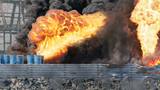












In Volume 2 of Alasgar Hasanov’s FX workshop, things get explosive. Learn how to leverage the fast and efficient tools in Houdini 18.5 to create a large-scale fire with thick smoke that matches a real-world reference, plus master your own realistic explosions. Helpful tips and tricks for lighting and rendering your pyro FX shots are also included in this final volume of our two-part series.
Alasgar Hasanov is a Senior FX Artist with over 6 years of experience working with Houdini. Building upon the knowledge taught in Volume 1, this in-depth overview covers the new Pyro Source nodes in Houdini 18.5 used for explosions, including Pyro Burst Source and Pyro Trail Source, and shows how to create different types of explosions as well as how to use the Pyro Shader along with some efficient pyro-rendering workflows.
The workshop concludes with some effective pyro lighting and rendering techniques, sharing how to shade, light, and render a variety of pyro simulations. Alasgar includes how to use interactive lighting as well as some of his tried-and-trusted advanced shading methods.
For an introduction to creating smoke and small-scale fire simulations, watch Introduction to Pyro FX in Houdini: Volume 1.
Included with this workshop are the Houdini project files for each chapter.
8 Lessons
This lesson provides a comprehensive foundation for creating convincing large-scale fire effects in Houdini. The main emphasis is on the importance of proper timing, scale relationships, and layered detail systems. The combination of traditional pyro-simulation techniques with newer shading approaches, such as the Pyro Bake Volume node, demonstrates how to achieve professional-quality results suitable for film and television production. Alasgar sets up the next lesson to cover custom wind fields and micro-solvers for even more advanced control.
Duration: 45m 48s

While basic micro solvers can improve fire simulations, creating custom wind fields provides the level of control needed for professional results. This lesson emphasizes that simple gas/wind forces often produce unrealistic linear behavior. In contrast, custom velocity fields generated from scattered points and turbulent noise can create dynamic, evolving smoke patterns that look natural and respond appropriately to environmental factors, such as helicopter downwash.
Duration: 26m 1s

This lesson provides a comprehensive workflow for creating realistic, large-scale fire simulations in Houdini with custom wind effects. The key to success lies in balancing technical optimization, such as VDB workflows and proper caching, with artistic considerations of subtle wind effects and altitude-based velocity variation to achieve both visual realism and manageable simulation times. The instructor emphasizes that proper setup can achieve high-quality results with reasonable simulation times, making complex fire effects accessible for production work.
Duration: 29m 20s

This lesson demonstrates a powerful explosion workflow in Houdini 18.5, showcasing how the Pyro Burst node streamlines the creation of complex, multi-burst explosions. The key to realistic results lies in proper timing, randomization, multi-field sourcing, and strategic animation of solver parameters to simulate the physics of large-scale explosions that start fast and gradually slow down. Alasgar will then continue with ground dust and trail effects to complete the explosion system in the next lesson.
Duration: 47m 25s

This lesson continues the explosion exploration by creating realistic pyro trails in Houdini. The dual-node approach, with separate density and temperature handling, provides precise control over both the physical simulation and the visual appearance of explosive trails. Alasgar emphasizes that many parameters are artistic choices dependent on reference material and desired aesthetic, while highlighting the critical technical requirements for proper timing synchronization and field management within the solver system.
Duration: 44m 10s

This lesson demonstrates an efficient workflow for adding ground dust effects to the explosion simulation by leveraging the existing Pyroburst source rather than building a custom setup. The key insight is to use smart parameter modifications and transforms to repurpose explosion geometry for ground-level dust effects, while adding environmental forces such as wind and turbulence to enhance realism. Alasgar emphasizes the importance of proper caching workflows for complex simulations and lays the foundation for multi-layer rendering in the following lessons.
Duration: 42m 1s

This lesson demonstrates the critical transition from simulation to final render in Houdini, emphasizing the importance of proper render layer separation and lighting design. The systematic approach of creating individual passes for each element (explosion, ground dust, background) provides maximum flexibility in post-production while maintaining photorealistic quality. The integration of geometry-based lighting from the explosion itself creates natural illumination, enhancing the overall believability of the effect.
Duration: 48m 40s

This lesson concludes the introduction to sparse/SOPs-based Pyro effects in Houdini 18.5, demonstrating that complex VFX workflows can be completed entirely within Houdini when necessary. Alasgar emphasizes that, while external compositing software may be preferable, Houdini's built-in tools can produce professional results. The new SOP-based Pyro tools represent the future direction of Houdini's effects capabilities, offering faster, more intuitive workflows than traditional DOP-based approaches.
Duration: 24m 5s

Primary tools
For this workshop you’ll need:

* Note that these programs and materials will not be supplied with the course.
Project Files
When you download the workshop files, you'll get access to a two-part Houdini project package. Inside, you'll find:
- Houdini scenes (.hiplc) – Project files containing the 2 Pyro effects setups presented in the workshop
- Text document (.txt) - A document containing a link to the helicopter asset used for the large-scale fire Pyro effects demo
- Texture images (.jpg) - Images used as the background plane in the simulation setups
Skills Covered
Who’s this Workshop for?
This workshop is designed for intermediate Houdini artists who have completed Volume 1 or possess foundational pyro simulation knowledge. VFX artists, technical directors, and simulation specialists seeking to advance their skills in creating large-scale explosions and fires will find this training particularly valuable.
Game developers, motion graphics artists, and visual effects professionals looking to enhance their pyro rendering capabilities will also benefit significantly. The workshop provides production-ready techniques for creating realistic explosions and fire effects that match real-world references, making it essential for artists working on high-end commercial projects.
Learning Outcomes
By completing this workshop, artists will have mastered advanced pyro simulation techniques using Houdini 18.5's latest tools for creating realistic, large-scale explosions and fire effects.
Key skills include:
- How to utilize Pyro Burst Source and Pyro Trail Source nodes for realistic explosion simulations.
- How to create large-scale fire effects with thick smoke that match real-world reference footage.
- How to implement efficient pyro rendering workflows using Houdini's advanced simulation tools and techniques.
- How to master the Pyro Shader for achieving professional-quality fire and smoke visual results.
- How to apply interactive lighting techniques specifically designed for enhancing pyro simulation renders.
- How to execute advanced shading methods for various types of pyro effects and simulations.
- How to optimize rendering pipelines for complex pyro FX shots in production environments.


