
 Photoshop
 Maya
Maya ZBrush
 Substance Painter
 Blender
 Unreal Engine
 Arnold
 Nuke
Nuke KeyShot
 V-Ray
V-Ray Marmoset Toolbag
 Mari
Mari Marvelous Designer
 Substance Designer
 3ds Max
 3DCoat
 Redshift
 Faceform Wrap
 Lightroom
 After Effects
 OctaneRender
 SpeedTree
 Daz 3D
 Agisoft Metashape
 Fusion
 Modo
Modo RealityCapture
 Gaea
Gaea Cinema 4D
 Gravity Sketch
 Premiere
 Procreate
 Clip Studio Paint
 SketchUp
 SketchBook
 Katana
 Natron
 Mudbox
 Quixel Bridge
 Quixel Megascans
 Quixel Mixer
 Substance 3D Modeler
 World Creator
 Yeti
Yeti Ziva VFX
 Mixamo
 Adobe Medium
 Quixel DDO
 xNormal
 Meshmixer
 Storyboard Pro
 DaVinci Resolve
 TreeIt
 World Machine
 Gaffer
 Corel Painter
 SynthEyes
 Krita
Krita Massive
 Materialize
 Unity
Unity Ornatrix
 PreForm
 Moi 3D
 animBot
 QuickTime
 ReCap
ReCap
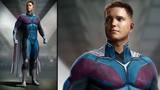
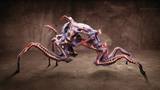
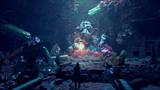










Follow along as FX Supervisor, Simon Littlejohn, creates a series of effects using Houdini and Nuke, from bone-crushing tendrils to a slimy tentacle attack. Simon approaches the workshop as the creation of a complete shot, from start to finish, revealing his processes and techniques along the way.
With over a decade of industry experience, Simon walks through his tried-and-trusted methods for procedurally generating curves using for-loops, and shows how to attach those curves to any animated character using simple yet powerful VEX. From there, he instructs how to “grow” those curves over time in visually interesting patterns, and ultimately create high-fidelity 3D geometry from them. The second technique in this workshop details how to create a slime trail left behind as the tendrils take over the character’s body. Simon shares how to create this highly controllable effect without the need for FLIP simulation, which can often be expensive and unpredictable.
The following effect focuses on shooting webbed tendrils from the character’s body and attaching them to his surrounding environment. Simon explains how to create constraints using simple VEX, and run animated curves through a vellum simulation to aid in the realism of the effect. Additionally, you will discover how to create highly detailed webbing patterns that follow the animation of your curves. For the final effect, Simon revisits all the techniques covered to create a tentacle that bursts from the character's hand, firing directly into the camera.
Each effect demonstrated in this workshop is highly adaptable, and can be repurposed for a wide variety of needs. In the final segment of the tutorial, Simon discusses how to shade and render the effects, and offers his final thoughts as well as a review of the final render.
The downloadable resources provided with this workshop include the Houdini project and character files.
16 Lessons
In this VFX shot workshop, Simon Littlejohn introduces his background as a professional VFX artist and outlines the series. Covering everything from basic curve growth to complex tentacle shots, he provides a comprehensive workflow for creating realistic, unsettling organic effects at a production-level standard. The lessons are aimed at artists seeking to advance their skills in creature effects and procedural animation techniques.
Duration: 43s

In this first lesson, Simon walks through his workspace setup and personal preferences within Houdini. A key focus is the geometry spreadsheet and the importance of keeping it visible, as monitoring parameter changes in real time is critical for effective effects work. With this setup in place, the workshop is ready to move into production-focused topics.
Duration: 1m 27s

Simon establishes the foundational setup for procedural tendril growth on a character. By converting the character into a unified, properly triangulated mesh and defining start and end regions through painted attributes, the geometry is prepared for algorithmic path-finding that generates organic-looking tendrils extending from the feet to the extremities. The lesson concludes by outlining the transition to implementing the growth system using for-loops.
Duration: 8m 36s

This lesson showcases Simon’s workflow for creating complex, organic structures on character models using iteration-based randomization. By combining for-loops with noise-based pathing and defined start and end points, the system generates varied, natural-looking tendrils that avoid repetitive or overlapping patterns. The modular setup allows for quick adjustments to coverage and density through simple mask painting and iteration count changes, making it a flexible solution for adding procedural detail to 3D models.
Duration: 13m 27s

In this lesson, Simon presents a comprehensive workflow for dynamically modifying curve-based elements attached to animated geometry in Houdini. By combining randomized color attributes, animated noise, and UV-based attachment points, a sophisticated system is created in which curves maintain their surface relationship to the character mesh while exhibiting individual variation in thickness and movement. This technique is particularly effective for organic effects such as hair or tentacles that must follow deforming geometry.
Duration: 13m 8s

Simon discusses methods for animating growing curves, including approaches that offer significantly more control than other techniques. By leveraging VEX code, UV attributes, and randomization, his preferred workflow enables natural-looking, staggered growth with customizable timing variation and animation easing. Emphasis on cleaning up geometry and maintaining consistent point counts reflects professional pipeline practices that help prevent issues in downstream meshing operations.
Duration: 15m 58s

In this lesson, Simon demonstrates the creation of organic, animated tendrils by combining curve growth, careful attribute management, and VDB conversion techniques. Achieving natural-looking results relies on layering size, color, and timing variation while using VDB reshaping to simulate surface tension. Simon’s approach to testing and adjusting thickness distribution ensures the final effect maintains clear visual hierarchy, with smaller tendrils visible beneath larger ones.
Duration: 15m 24s

Simon now presents a procedural system for adjusting and animating the tendrils, adding growth and pulsation effects. The workflow demonstrates advanced Houdini techniques, including solver SOPs for data accumulation, attribute manipulation for coordinated animation, and VDB conversion for the final result. The effect produces visually rich, irregular organic forms that grow along curves while maintaining temporal coherence and adding secondary pulsating motion.
Duration: 34m 24s

In this lesson, Simon showcases a fully procedural approach to creating organic slime or goop effects without relying on full physics simulations, allowing for greater artistic control and faster iteration. By using solvers for data persistence, attribute transfers for spatial relationships, and VDB operations for mesh generation, convincing effects are created that appear physically based and travel with the character. The workflow emphasizes the importance of subframe data for smooth motion and demonstrates how layering simple operations can produce complex, believable results suitable for production.
Duration: 22m 16s

This lesson examines how artists can create an organic web effect that dynamically connects a character to the surrounding environment. A key innovation at this stage involves using custom radial normals and frozen raycast positions to maintain visual stability while allowing the character to move. By combining careful attribute management, UV-based animation controls, and randomized growth parameters, the technique produces believable partial web tendrils that form the foundation for more complex secondary webbing geometry in subsequent lessons.
Duration: 24m

Simon covers the technical elements involved in creating organic, web-like tendrils by building a system of branching curves with randomized, staggered growth patterns. While the result is visually compelling, it is emphasized that this stage represents preparatory geometry rather than a finished effect. The structure serves as the foundation for a Vellum simulation, which adds realistic physics and dynamic behavior to produce the final result.
Duration: 17m 32s

In this lesson, Simon demonstrates the process of creating realistic wire simulations attached to an animated character using Houdini’s Vellum solver. Success depends on properly defining which points follow the base animation and which are simulated, then fine-tuning physical properties to achieve the desired look. The lesson concludes by outlining how these simulated curves are prepared for shaping into final renderable geometry.
Duration: 9m 41s

In this lesson, Simon presents a procedural approach to creating realistic spider web geometry that conforms accurately to surfaces while maintaining organic variation. By using multiple attribute systems, including UV ramps, color masks, normals, and connectivity, different aspects of the geometry are controlled independently, preserving both artistic control and technical precision. The techniques demonstrated extend beyond web creation and apply to any scenario involving twisted, varied curves that must conform to complex surfaces with specific attachment and blending behavior.
Duration: 24m 4s

Simon now covers Houdini techniques for creating detailed connective tissue geometry between curves, emphasizing the importance of proper data flow and attribute management throughout the node network. The workflow demonstrates how mathematical precision, combined with procedural noise and randomization, can produce organic-looking technical structures. The resulting geometry maintains visual continuity while preserving the flexibility to adjust parameters procedurally before final caching.
Duration: 17m 38s

In this lesson, Simon presents a workflow for creating a final animated tendril with realistic variation and motion, directed toward the shot camera. Success comes from layering multiple techniques, including proper curve setup, noise application, VDB smoothing, and careful attribute management. The result is a visually compelling effect, with tendrils shooting dynamically from the character’s hands toward the camera.
Duration: 27m 36s

In this final lesson, Simon shares practical production decisions commonly seen in VFX work, emphasizing efficiency over complexity. His refinement choices, including the use of simpler shaders, rendering in Mantra instead of Karma, and strategic render optimizations, highlight the importance of balancing quality with render time constraints, particularly for solo artists. The techniques demonstrated for velocity transfer, procedural growth effects, and rendering optimization are applicable across a wide range of VFX scenarios, including fluid simulations, volumes, and rigid body dynamics.
Duration: 12m 35s

Primary tools
For this workshop you’ll need:

* Note that these programs and materials will not be supplied with the course.
Project Files
When you download these workshop files, you'll get access to Simon Littlejohn's complete Houdini VFX project, which you can follow along with. Inside you'll find:
- Houdini project files (.hiplc) – Ready-to-open scene files with all the node networks and effects setups you can immediately start exploring and modifying
- Character textures & materials (.png) - A full set of texture maps, including diffuse, normal, and specular maps for the character model used in this project
- HDR lighting environment (.hdr) - Studio lighting setup you can use to render and preview your project
Skills Covered
Who’s this Workshop for?
This workshop is designed to support intermediate to advanced Houdini artists working in VFX, motion graphics, or game development who want to master procedural organic effects. FX supervisors, technical directors, and Houdini artists seeking production-ready techniques for creating complex tentacle and tendril systems will find this particularly valuable.
Pipeline TDs, generalist artists, and students transitioning into specialized FX roles will also benefit significantly from learning this workflow. The workshop provides industry-tested workflows that can be applied immediately to professional projects, making it ideal for anyone looking to expand their procedural modeling and simulation toolkit with proven, adaptable techniques.
Learning Outcomes
At the conclusion of this workshop, artists will have mastered professional techniques for creating complex organic FX systems using procedural workflows and industry-standard tools.
Key skills include:
- How to procedurally generate animated curves using For Loops and VEX scripting techniques.
- How to attach dynamic curve systems to any animated character using simple VEX.
- How to create time-based growth patterns for visually compelling organic animation effects.
- How to generate high-fidelity 3D geometry from procedural curve networks and systems.
- How to create controllable slime trail effects without expensive FLIP fluid simulations.
- How to implement Vellum constraints for realistic tendril physics and environmental interactions.
- How to design detailed webbing patterns that follow curve animation and deformation.


