 Photoshop
 Maya
Maya ZBrush
 Houdini
 Substance Painter
 Blender
 Unreal Engine
 Arnold
 Nuke
Nuke KeyShot
 V-Ray
V-Ray Marmoset Toolbag
 Mari
Mari Marvelous Designer
 Substance Designer
 3ds Max
 3DCoat
 Redshift
 Faceform Wrap
 Lightroom
 After Effects
 OctaneRender
 SpeedTree
 Daz 3D
 Agisoft Metashape
 Fusion
 Modo
Modo RealityCapture
 Gaea
Gaea Cinema 4D
 Gravity Sketch
 Premiere
 Procreate
 Clip Studio Paint
 SketchUp
 SketchBook
 Katana
 Natron
 Mudbox
 Quixel Bridge
 Quixel Megascans
 Quixel Mixer
 Substance 3D Modeler
 World Creator
 Yeti
Yeti Ziva VFX
 Mixamo
 Adobe Medium
 Quixel DDO
 xNormal
 Meshmixer
 Storyboard Pro
 DaVinci Resolve
 TreeIt
 World Machine
 Gaffer
 Corel Painter
 SynthEyes
 Krita
Krita Massive
 Materialize
 Unity
Unity Ornatrix
 PreForm
 Moi 3D
 animBot
 QuickTime
 ReCap
ReCap
















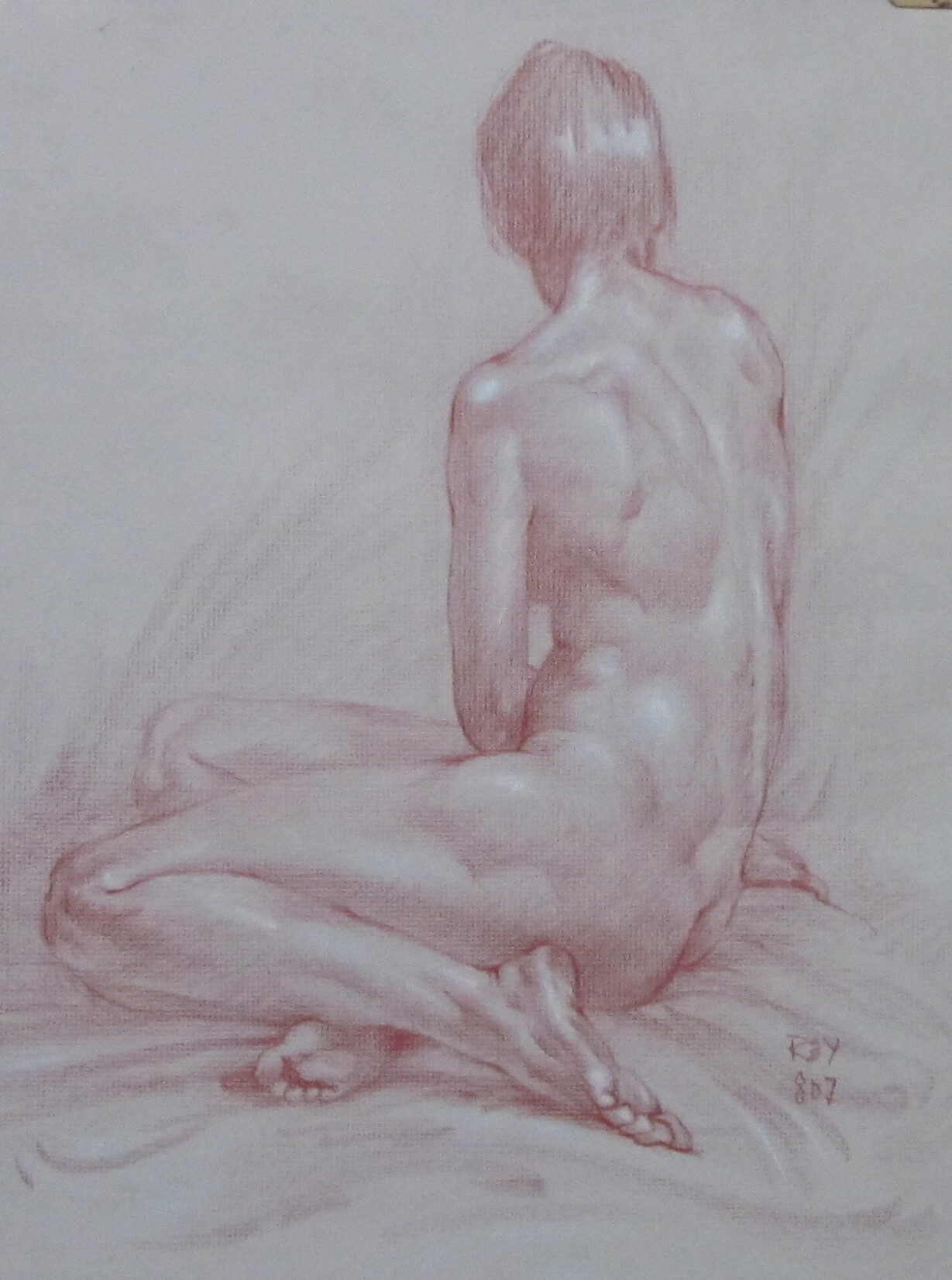
In this workshop, Artistic Anatomist and Professor Rey Bustos delves into the anatomy of the human leg and foot. Rey splits the lecture into two sections: the lower leg and foot, then the upper leg, thigh and gluteals. In the first section, he explains and breaks down the forms and major tendons of the feet that make up the most important aspects necessary for every artist to be aware of. He then leads the lecture up to the essential muscles of the leg and lists each muscle and its placement on the skeleton while referencing a muscle sheet that is provided to you. Once the leg and feet are understood, Rey moves up to the thigh and gluteal section of the body. In this section, he starts not with individual muscles as he did with the lower leg, but with the four major groups of muscles in the thigh. These are the quadriceps, the adductors, the flexors (Hamstrings) and finally the gluteal muscles.
Rey includes some of the tendons, iliotibial band and relates how to better remember some of these areas as form groups. Though Rey explains the important individual muscles, this lecture makes it easier for the viewer to remember the bigger forms rather than the smaller individual muscles. By the end of this workshop, Rey’s objective is to teach every student not so much about the details of each muscle but how to see the body in a fuller manner by seeing forms that might not have been seen before, simply because of the lack of awareness of these muscles and forms.
8 Lessons
This first lesson of Rey Bustos’ workshop sets the stage for an anatomy lesson focused on the lower leg and foot. Rey establishes clear boundaries for the lesson and uses accessible analogies to ensure artists understand exactly which anatomical structures will be discussed.
Duration: 35s

Understanding leg anatomy doesn't have to be complicated when broken down into essential components. Artists learn to organize the six main leg muscles into three memorable pairs and start with skeletal landmarks to accurately render structure. Rey uses practical observation and functional mechanics to make this complex anatomy accessible for artistic application while maintaining accuracy.
Duration: 28m 55s

This anatomy lesson bridges medical terminology with artistic application, demonstrating how understanding muscle and tendon structure improves figure drawing. Rey reinforces that knowledge of anatomical landmarks and the relationship between bones and soft tissue allows for informed decisions when rendering the human form.
Duration: 20m 6s

Anatomical knowledge should enhance artistic freedom rather than constrain it. Rey demonstrates that by understanding the underlying structure, artists can create more convincing and expressive figure drawings. Through practice with live models and master drawings, artists learn that strong anatomy and loose, expressive drawing can work together seamlessly.
Duration: 17m 12s

In this lesson, Rey will review a comprehensive study of the lower limb, covering the thigh and gluteal regions. Artists learn through a systematic approach of building from skeletal anatomy upward. This thorough, structured format is designed to provide a complete understanding of the lower anatomy.
Duration: 22s

Artistic anatomy requires understanding both structure and function. Rey highlights that great artists such as Michelangelo needed profound anatomical knowledge to depict the skeleton and muscles in marble. By breaking down complex anatomy into manageable groups and using analogies, the lesson makes medical terminology accessible while maintaining the technical accuracy essential for rendering the human form convincingly.
Duration: 43m 23s

Understanding muscle origins, insertions, and shapes helps draw and sculpt the human figure accurately. Artists learn from Rey's use of memorable analogies and practical demonstrations, which make complex information accessible.
Duration: 28m 20s

In this final lesson, Rey emphasizes rhythm, gestural marking, and interpretation over photorealistic accuracy, reflecting the philosophy of the Old Masters. Artists learn to treat anatomy as a visual language that requires patient study to draw confidently from knowledge. A key takeaway from these lessons is that patience and persistence allow for gradual learning while maintaining the joy of the drawing process.
Duration: 31m 59s

Project Files
When you download the project file for this workshop, you'll gain access to Rey Bustros's muscle reference file. Inside, you'll find:
- Reference material (.pdf) – A reference file that helps anatomy artists correctly identify muscles in the lower leg and foot
Skills Covered
Who’s this Workshop for?
This workshop is created for intermediate to advanced artists seeking to master human leg and foot anatomy for figure drawing, character design, and illustration. Whether you're a concept artist, illustrator, or fine artist, this comprehensive anatomical study will elevate your understanding of lower body structure and form.
Beginning artists with basic drawing fundamentals will also benefit significantly from Rey Bustos’s systematic approach to breaking down complex anatomy into manageable form groups. Students preparing for art school, digital artists working on character models, and traditional painters looking to improve their figure work will gain essential knowledge for creating more convincing and anatomically accurate artwork.
Learning Outcomes
Upon completing this workshop, artists will have developed a comprehensive understanding of leg and foot anatomy by carefully observing form and identifying key muscle groups.
Key skills include:
- How to identify and draw the major tendons and essential forms of the human foot.
- How to locate and render individual muscles of the lower leg using anatomical reference sheets.
- How to understand the four major thigh muscle groups: quadriceps, adductors, hamstrings, and gluteals.
- How to recognize and depict the iliotibial band and key tendons in the upper leg.
- How to see the body as interconnected form groups rather than isolated muscles.
- How to apply anatomical knowledge to create more convincing and structurally sound figure drawings.