 Photoshop
 Maya
Maya ZBrush
 Houdini
 Substance Painter
 Blender
 Unreal Engine
 Arnold
 Nuke
Nuke KeyShot
 V-Ray
V-Ray Marmoset Toolbag
 Mari
Mari Marvelous Designer
 Substance Designer
 3ds Max
 3DCoat
 Redshift
 Faceform Wrap
 Lightroom
 After Effects
 OctaneRender
 SpeedTree
 Daz 3D
 Agisoft Metashape
 Fusion
 Modo
Modo RealityCapture
 Gaea
Gaea Cinema 4D
 Gravity Sketch
 Premiere
 Procreate
 Clip Studio Paint
 SketchUp
 SketchBook
 Katana
 Natron
 Mudbox
 Quixel Bridge
 Quixel Megascans
 Quixel Mixer
 Substance 3D Modeler
 World Creator
 Yeti
Yeti Ziva VFX
 Mixamo
 Adobe Medium
 Quixel DDO
 xNormal
 Meshmixer
 Storyboard Pro
 DaVinci Resolve
 TreeIt
 World Machine
 Gaffer
 Corel Painter
 SynthEyes
 Krita
Krita Massive
 Materialize
 Unity
Unity Ornatrix
 PreForm
 Moi 3D
 animBot
 QuickTime
 ReCap
ReCap















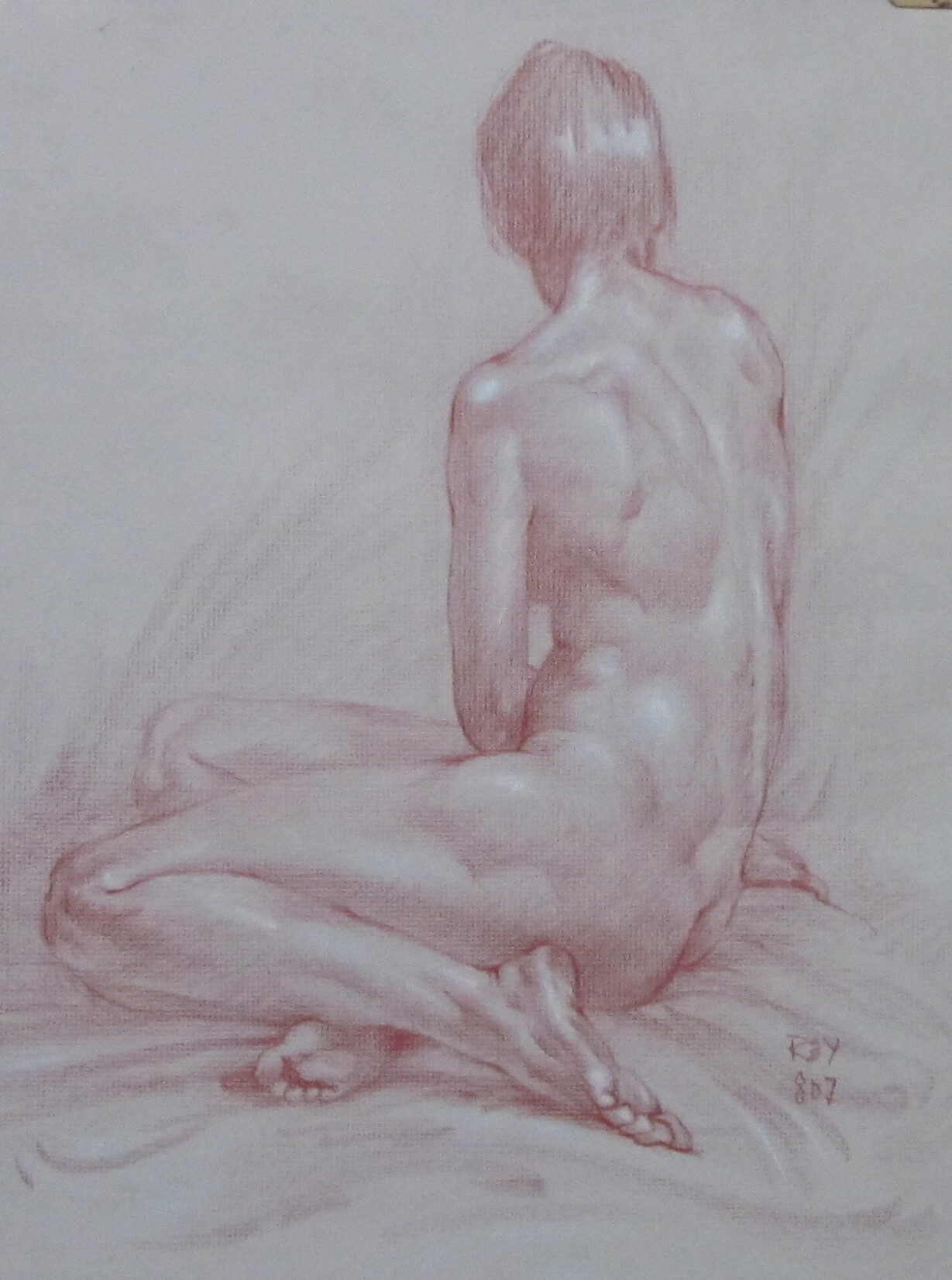
Artistic Anatomist and Professor Rey Bustos returns with Volume 3 in the Anatomy for Artists series. This third instalment is divided into two segments, beginning with the Front Torso and conluding with the Arm. Rey launches the workshop with an in-depth study of the layers of muscles that matter to artists when drawing the upper bodies of human figures and characters. The guide shares how the Rectus Abdominis, Pectoralis Major, External Oblique, Deltoid, and Serratus Anterior, are all essential to an artist’s understanding of human anatomy, in an easy-to-learn format.
The lecture continues with a focus on the arms, which Rey expertly divides into four main groups of function: the Flexors, the Extensors, the “Twins,” and the “Mini Twins.” Using a simplified approach, Rey explains these muscles as “teams” between groups — much like in a sports competition. The workshop explains how teams of muscles work together, and how they compare by size and purpose. The teaching reveals all the important anatomical names along with helpful tips and tricks for remembering and associating them in your artistic practice.
Completing the workshop, you will have a sound knowledge of all the essential muscles that are important to artists when studying and drawing the human torso and arms. Rey’s unique lecture and drawing demonstration is designed for artists of all levels to allow easy understanding of the key information that is pertinent to an artist’s education.
8 Lessons
This introduction lesson by Rey Bustos sets up an organized anatomy workshop that will teach artists about front torso musculature in a systematic way. Rey provides a structured approach by starting with the skeletal framework and using a numbered system. Artists learn through this accessible format to better retain anatomical information.
Duration: 35s

This anatomy lesson provides a foundational understanding of the front torso's structure by building from skeletal landmarks to muscle groups. Rey prioritizes simplification and interconnection, showing how bones provide attachment points and reference lines. By breaking down complex terminology into visual metaphors, the lesson makes advanced anatomy accessible for artists studying character design.
Duration: 28m 39s

Artists learn how muscles attach via aponeuroses, how they interdigitate, and how fiber directions create visible surface forms. Rey shows landmarks on live models and uses memorable teaching tools like the "picket fence" analogy. These methods make complex anatomical relationships easier to understand and apply during figure drawing sessions.
Duration: 20m 22s

To understand anatomy requires building knowledge layer by layer, from skeleton to muscles to surface form. Rey teaches a philosophy centered on repetition of master copies combined with structural understanding. Artists learn to construct believable figures from imagination while remaining informed by reality.
Duration: 20m 53s

In this lesson, artists will learn a comprehensive lesson on arm anatomy for artists. Rey starts with the skeletal foundation and simplifies a commonly difficult subject to build student confidence. This clear teaching approach establishes a strong base for mastering the complexities of the arm.
Duration: 33s

This lesson compares the triceps-to-elbow arrangement with the calf-to-heel structure, as Rey demonstrates how understanding one muscle group can illuminate others. Artists learn to focus on important landmarks and how they work together through clear visuals. This method uses simple drawings to make complex anatomical ideas easier to grasp.
Duration: 10m 13s

Understanding muscle structure isn't just about memorization; it's about recognizing patterns and relationships. Rey uses memorable analogies and classical art masterworks to show how muscles layer in three-dimensional space. Artists learn practical tools for accurately depicting the arm from any angle, ensuring the creation of convincing human figures regardless of subject matter.
Duration: 38m 20s

In the final lesson of his workshop, Rey reveals that figure drawing relies more on understanding anatomical structure and visual psychology than photorealistic rendering. Rey combines simplified construction with the strategic placement of shadows to allow the viewer's brain to complete the form.
Duration: 18m 41s

Project Files
When you download the workshop files, you'll get access to Rey Bustos's reference guide, which covers everything you need to understand the front torso and arm. Inside, you'll find:
- Reference materials (.pdf, .jpg, .docx) – Reference images and text files to support your workflow and to help guide you through the process
Skills Covered
Who’s this Workshop for?
This workshop is developed for artists at all skill levels seeking to improve their figure drawing and character design abilities. Whether you're a beginner who is struggling with proportions or an intermediate artist looking to refine your anatomical knowledge, Rey's simplified teaching approach makes complex muscle structures accessible and easy to understand.
Professional illustrators, concept artists, animators, and traditional fine artists will find tremendous value in this systematic breakdown of torso and arm anatomy. Students pursuing art education or professionals working in entertainment, gaming, or medical illustration will gain foundational knowledge that directly applies to their creative work and career development.
Learning Outcomes
After completing this workshop, artists will have mastered the essential muscle groups of the human torso and arms through Rey Bustos’s systematic team-based approach.
Key skills include:
- How to identify and draw the five key torso muscles that matter most to artists.
- How to understand muscle relationships using Rey's sports team analogy for easier memorization and application.
- How to properly render the Rectus Abdominis, Pectoralis Major, and External Oblique in figure drawings.
- How to organize arm muscles into four functional groups: Flexors, Extensors, Twins, and Mini Twins.
- How to apply anatomical knowledge to create more convincing human figures and character designs.
- How to remember muscle names and functions using Rey's proven tips and association techniques.