
 Photoshop
 Maya
Maya ZBrush
 Houdini
 Substance Painter
 Blender
 Unreal Engine
 Arnold
 Nuke
Nuke KeyShot
 V-Ray
V-Ray Marmoset Toolbag
 Mari
Mari Marvelous Designer
 Substance Designer
 3ds Max
 3DCoat
 Redshift
 Faceform Wrap
 Lightroom
 After Effects
 OctaneRender
 SpeedTree
 Daz 3D
 Agisoft Metashape
 Fusion
 Modo
Modo RealityCapture
 Gaea
Gaea Cinema 4D
 Gravity Sketch
 Premiere
 Procreate
 Clip Studio Paint
 SketchUp
 SketchBook
 Katana
 Natron
 Mudbox
 Quixel Bridge
 Quixel Megascans
 Quixel Mixer
 Substance 3D Modeler
 World Creator
 Yeti
Yeti Ziva VFX
 Mixamo
 Adobe Medium
 Quixel DDO
 xNormal
 Meshmixer
 Storyboard Pro
 DaVinci Resolve
 TreeIt
 World Machine
 Gaffer
 Corel Painter
 SynthEyes
 Krita
Krita Massive
 Materialize
 Unity
Unity Ornatrix
 PreForm
 Moi 3D
 animBot
 QuickTime
 ReCap
ReCap














8 Lessons
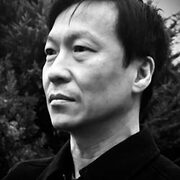
Van Arno introduces Volume 2 in his series, emphasizing the importance of active learning through practice. Van makes it clear that artists will gain significantly more from the experience by drawing along with the video demonstrations. His workshop will bridge foundational skills with more complex figure drawing concepts, making it suitable for students ready to advance beyond basic techniques.
Duration: 34s

In this lesson, Van emphasizes that successful figure drawing begins with understanding fundamental shapes, proportions, and spatial relationships rather than details. By using the head as a consistent measurement tool, blocking in simple forms, and checking work with negative space, artists can learn how to build accurate figure drawings that can later be refined with details. His willingness to make corrections throughout demonstrates that drawing is an iterative process of observation and adjustment.
Duration: 13m 20s

Two-minute figure drawings are an essential warm-up exercise that teaches artists to quickly capture the most important aspects of a pose: gesture, proportion, and spatial relationships. By focusing on gestural lines, major body masses, negative space, and key anatomical landmarks rather than details, artists can learn how to create solid foundational drawings that can be developed further or stand alone as dynamic gesture studies. Van's disciplined approach trains the eye to see relationships and proportions quickly — a fundamental skill for all figurative artists.
Duration: 28m 10s

This lesson demonstrates how successful figure drawing is built on a foundation of quick, accurate gesture drawings that capture essential proportions and relationships. By resolving these fundamental issues in the first two minutes, artists can learn how to confidently add detail and refinement to longer poses while maintaining the original gestural flow. Van's emphasis on using negative space, trusting observation over assumption, and employing anatomical landmarks provides practical strategies for creating dynamic, proportionally accurate figure drawings.
Duration: 25m 51s

In this lesson, Van demonstrates that mastering volumetrics is essential for artists who need to depict figures in three-dimensional space from imagination. By systematically analyzing and recording how each body part exists in depth relative to the viewer, artists can learn how to not only create more convincing drawings from life but also manipulate and redraw those figures from entirely different camera angles. This skill is particularly valuable for professional applications like storyboarding and concept art, where flexibility and spatial understanding are crucial.
Duration: 34m 2s

This lesson demonstrates that successful figure drawing requires systematic analysis of perspective, proportion, and three-dimensional form rather than simply copying contours. Van's willingness to continuously revise and correct his work emphasizes that drawing is an iterative problem-solving process. By breaking down complex poses into manageable steps (gesture, construction, volume, and tone) and maintaining flexibility throughout, artists can learn how to tackle challenging foreshortened poses with confidence.
Duration: 38m 41s

This lesson showcases that successful figure drawing relies on careful observation, constant measurement checking, and building from simple structural shapes to refined details. Van's practice of adjusting and correcting throughout the process — even humorously accepting an oversized hand by referencing Michelangelo — illustrates how drawing is iterative, and requires flexibility and continuous reference to the subject. His combination of structural planning with responsive observation creates a balanced approach suitable for developing artists.
Duration: 25m 42s

This lesson concludes Van's workshop with a review of how drawing is best learned through hands-on practice. He encourages artists to check out Volumes 3 and 4 of his workshop series, which explore different drawing techniques, including gestural methods and more detailed rendering. His series offers a comprehensive curriculum for artists to develop their figure drawing skills.
Duration: 52s

Skills Covered
Who’s this Workshop for?
This workshop is designed for intermediate to advanced artists who want to strengthen their ability to draw the human figure as a three-dimensional form rather than a static pose. It is especially valuable for storyboard artists, production artists, and concept designers who need to draw figures accurately from multiple angles based on narrative or camera direction rather than live reference.
Illustrators, gallery artists, and figurative draftsmen seeking to deepen their understanding of the body's volume will also benefit from this training. The workshop emphasizes spatial thinking, structural clarity, and professional drawing habits developed through years of industry and fine art practice.
Learning Outcomes
By completing this workshop, artists will develop a strong volumetric approach to figure drawing and gain the ability to construct and redraw figures convincingly from any viewpoint.
Key skills include:
- Understanding key anatomical differences between male and female figures and how they affect form and structure.
- Constructing dynamic action poses and extreme contortions with clear three-dimensional logic.
- Breaking the human figure down into simple volumetric forms that support accurate perspective drawing.
- Redrawing figures from new angles without relying on live or photo reference.
- Applying perspective principles to figures for production, storyboard, and narrative-driven work.
- Using tone and lighting to reinforce volume, depth, and form in longer figure studies.


