
 Photoshop
 Maya
Maya ZBrush
 Substance Painter
 Blender
 Unreal Engine
 Arnold
 Nuke
Nuke KeyShot
 V-Ray
V-Ray Marmoset Toolbag
 Mari
Mari Marvelous Designer
 Substance Designer
 3ds Max
 3DCoat
 Redshift
 Faceform Wrap
 Lightroom
 After Effects
 OctaneRender
 SpeedTree
 Daz 3D
 Agisoft Metashape
 Fusion
 Modo
Modo RealityCapture
 Gaea
Gaea Cinema 4D
 Gravity Sketch
 Premiere
 Procreate
 Clip Studio Paint
 SketchUp
 SketchBook
 Katana
 Natron
 Mudbox
 Quixel Bridge
 Quixel Megascans
 Quixel Mixer
 Substance 3D Modeler
 World Creator
 Yeti
Yeti Ziva VFX
 Mixamo
 Adobe Medium
 Quixel DDO
 xNormal
 Meshmixer
 Storyboard Pro
 DaVinci Resolve
 TreeIt
 World Machine
 Gaffer
 Corel Painter
 SynthEyes
 Krita
Krita Massive
 Materialize
 Unity
Unity Ornatrix
 PreForm
 Moi 3D
 animBot
 QuickTime
 ReCap
ReCap



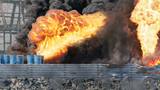












Discover how to build a fully scalable cinematic destruction shot in Houdini using professional procedural techniques. Recommended for intermediate-level Houdini artists, this 8-hour workshop by David Silberbauer guides you through how to manipulate attributes in Houdini, covers terrains and height field basics, and details how to compile blocks. You’ll see how to randomize attributes, how to set up a fracturing system and build custom constraints. You’ll also learn how to set up a DOP Network to handle RBD destruction setup and review the important TBD basics in SOPs. From there, David guides you through customizing velocities for use in POP networks and then using POPs for debris, as well as how to manipulate debris to use it as a volume source.
This workshop details how to build from a volume source to create dust with the Pyro Solver, moving on to handling a large-scale simulation. You’ll learn how to not only work in a procedural way but also how to think procedurally, helping all artists feel empowered to build their own large-scale scenes. While this workshop is intended for intermediate users, it also offers an interesting insight for anyone with basic Houdini knowledge looking to learn more about professional industry workflows.
A Houdini apprentice file with a basic cinematic destruction setup is provided with this workshop.
Special thanks to SideFX and Dell Technologies for supporting this workshop.
10 Lessons
This workshop sets out an organized approach for creating complex destruction scenes in Houdini. Starting simple with blocked-out geometry and progressively adding detail, artists can avoid costly simulation times and iteration problems. David Silberbauer’s procedural workflow provides maximum flexibility, enabling artists to learn multiple Houdini skills while maintaining an efficient production pipeline that can be easily modified and reused for different scenarios.
Duration: 14m 10s

This lesson sets out a workflow for creating a procedural village in Houdini using heightfields and instances. By combining terrain generation, scattering, and loop-based processing, David demonstrates how to create varied building structures from simple primitives.
Duration: 35m 15s

This lesson sets out a procedural workflow for creating varied building facades, setting up a flexible system that generates randomized yet controllable architectural elements. The methods prioritize stability over finicky operations, ensuring reliable results when working with procedural building generation in Houdini.
Duration: 39m 29s

This lesson demonstrates practical techniques for assembling procedural buildings in Houdini. A key takeaway is the need to combine technical efficiency and artistic pragmatism, accepting imperfect geometry when it serves the overall aesthetic. By combining proper workflow with creative flexibility, artists can build complex architectural elements while maintaining reasonable render times and visually authentic structures.
Duration: 53m 15s

The final lesson on procedural modeling from this workshop sets out how to create balconies, railings, flooring, and realistic supports that adapt to terrain. David emphasizes the need to maintain simple geometry for upcoming simulations while demonstrating professional workflow practices like proper scene organization and cleanup.
Duration: 54m 25s

This lesson establishes a foundation for RBD (Rigid Body Dynamics) workflows in Houdini, stressing the importance of speed of iteration and procedural flexibility, and demonstrating how starting simple allows for rapid testing. The Boolean fracture method used produces realistic breakage patterns suitable for architectural destruction effects.
Duration: 48m 28s

This lesson sets out a workflow for creating sophisticated building destruction simulations in Houdini using DOP networks rather than simplified SOP-level tools. This approach offers more control over constraint behavior, optimization through active areas, and fine-tuning options for realistic effects. While the setup requires more configuration, it provides flexibility for complex production scenarios and enables artists to achieve specific visual results through parameter adjustment and constraint manipulation.
Duration: 45m 54s

This lesson continues the process of creating complex building destruction effects, with accompanying debris. By separating building components into manageable sections and using variant-based geometry, artists can achieve detailed destruction effects. The emphasis on optimization techniques like compile blocks and editing the simulation start frames makes the workflow practical for production environments.
Duration: 1h 9m 20s

This lesson sets out a workflow for adding dust effects to a destruction simulation. David’s focus on simplicity while maintaining visual quality shows that effective VFX work balances artistic quality with technical efficiency. By separating building and ground dust, and using techniques like volume sampling and velocity transfer, artists can create realistic dust simulations that respond naturally to animated collision objects.
Duration: 47m 30s

The final lesson in this workshop reveals that professional Houdini work requires technical problem-solving and a forward-thinking design. The ability to scale a single building destruction effect to multiple buildings demonstrates the power of Houdini in production environments, where last-minute changes are common. David’s discussion of the frustrations that artists face in production, and workarounds for them, provides insight into the constantly developing nature of effects work.
Duration: 31m 7s

Primary tools
For this workshop you’ll need:

* Note that these programs and materials will not be supplied with the course.
Project Files
This workshop provides artists with access to the project file David Silberbauer uses in their workshop to support the learning process. Artists will have access to:
- Houdini project file (.hipnc) – Complete scene file showing the full workflow and setup process
- The project file is provided by the instructor as a courtesy to give artists additional hands-on practice while following the demonstrated workflow. –
Skills Covered
Who’s this Workshop for?
This workshop is designed for intermediate-level Houdini artists working in VFX, film, or game development who want to master procedural destruction techniques. It's ideal for technical artists and VFX specialists seeking to build large-scale cinematic sequences using industry-standard workflows.
Artists with basic Houdini knowledge will also benefit significantly from this training. They'll gain valuable insights into professional production pipelines and learn to think procedurally, empowering them to tackle complex destruction scenes with confidence and technical proficiency.
Learning Outcomes
By completing this workshop, artists will develop skills for creating fully scalable cinematic destruction shots using professional procedural techniques in Houdini.
Key skills include:
- How to manipulate attributes and work with terrains using height fields.
- How to set up fracturing systems with custom constraints for realistic destruction.
- How to configure DOP networks for efficient RBD destruction setup and simulation.
- How to customize velocities and implement POP networks for dynamic debris simulation.
- How to convert debris into volume sources for destruction effects.
- How to build dust effects using the Pyro Solver from volume sources.
- How to handle large-scale simulations while maintaining procedural workflow efficiency.
- How to think procedurally when approaching complex cinematic destruction scene development.


