
 Photoshop
 Maya
Maya ZBrush
 Houdini
 Substance Painter
 Blender
 Unreal Engine
 Arnold
 Nuke
Nuke KeyShot
 V-Ray
V-Ray Marmoset Toolbag
 Mari
Mari Marvelous Designer
 Substance Designer
 3ds Max
 3DCoat
 Redshift
 Faceform Wrap
 Lightroom
 After Effects
 OctaneRender
 SpeedTree
 Daz 3D
 Agisoft Metashape
 Fusion
 Modo
Modo RealityCapture
 Gaea
Gaea Cinema 4D
 Gravity Sketch
 Premiere
 Procreate
 Clip Studio Paint
 SketchUp
 SketchBook
 Katana
 Natron
 Mudbox
 Quixel Bridge
 Quixel Megascans
 Quixel Mixer
 Substance 3D Modeler
 World Creator
 Yeti
Yeti Ziva VFX
 Mixamo
 Adobe Medium
 Quixel DDO
 xNormal
 Meshmixer
 Storyboard Pro
 DaVinci Resolve
 TreeIt
 World Machine
 Gaffer
 Corel Painter
 SynthEyes
 Krita
Krita Massive
 Materialize
 Unity
Unity Ornatrix
 PreForm
 Moi 3D
 animBot
 QuickTime
 ReCap
ReCap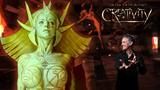
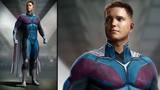
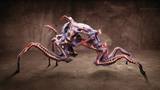


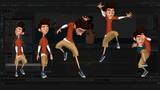










“The Ningyo” is an award-winning, 30-minute movie that will soon make its way to the big screen as a feature film. In this workshop, VFX Artist and Director of “The Ningyo,” Miguel Ortega, breaks down the creation of two specific shots featured in the period fantasy film to share his Nuke, look development, lighting techniques, and the basic concepts he follows when creating a short movie.
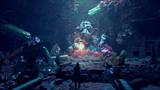
In the first shot of an underwater diver, Miguel reveals how he began with a rock photogrammetry asset by Quixel Megascans, blocked out the lighting, and then set up his shaders and textures. Using MASH for Maya, he then demonstrates his workflow for geometry scattering and how he populated rocks with barnacles for maximum impact. Miguel lectures on creating tileable materials with Quixel's Mixer for building ocean floors and provides a brief overview of multipass rendering and compositing using Maya and Nuke. He also shares his understanding of color channels for use with color correction and compositing of the lighting, and utilizing lens flares for underwater scenes.
The workshop concludes with a demonstration of Miguel’s tips and tricks for creating dynamic camera moves using image projections. Sampling a second shot from the film — a lecture hall with lots of live-action elements — Miguel divulges his compositing techniques in Nuke for creating highly realistic scenes far beyond the film set. The finale of the workshop offers a seven-minute behind-the-scenes look at “The Ningyo,” which gives a deep insight into the making of the movie and exposes how the labor-of-love project came to be.
11 Lessons
In this introductory lesson, Miguel Ortega dives into look-dev and lighting for film while sharing his inspiring journey from creature modeler to feature film director. He shows how creating a captivating short film with limited resources helped him break into the industry, proving that creativity and resourcefulness can outweigh experience. Miguel also emphasizes the power of sharing self-taught knowledge and learning on the fly, offering a glimpse into the collaborative, fast-paced world of visual effects and showing how anyone can make their mark.
Duration: 2m 9s

In this lesson, Miguel shows a practical, production-oriented approach to texturing assets for specific shots rather than creating generic materials using Maya and Mudbox. He demonstrates how combining photogrammetry scans with procedural textures and hand-painted masks creates realistic, complex surfaces efficiently. For this example, the underwater context serves as an excellent example of adapting standard look-development techniques to challenging lighting conditions where traditional rendering approaches (relying on specularity) must be reconsidered.
Duration: 21m 33s

This lesson provides an efficient method for adding organic surface detail meshes to other 3D models without the performance cost of keeping full geometry loaded in the scene. By combining instancing, painted masks, and proxy files, Miguel is able to generate thousands of detailed barnacles distributed across surfaces in his underwater scene while maintaining an interactive viewport. The technique is valuable for creating other realistic environmental details that would be impractical to model or texture individually.
Duration: 14m 50s

In this lesson, Miguel explores procedural texture creation in Quixel Mixer and demonstrates a workflow for building photorealistic natural environments. He shows how realism comes from layering textures, geometry, and atmospheric effects, while keeping in mind how the final camera angle will showcase each element.
Duration: 18m 59s

This lesson introduces us to the concept of Multi-pass rendering in Maya, which provides compositors with granular control over every aspect of a 3D render without needing to re-render the entire scene. Miguel shows how by separating lighting components and creating multi-matte passes with material IDs, artists can selectively adjust properties like reflections, specularity, and color on individual objects during compositing.
Duration: 9m 5s

In this lesson, Miguel demonstrates that successful compositing relies on understanding fundamental principles like how RGB channels actually function as masked color layers, then applying that knowledge through technical approaches rather than relying solely on visual judgment. The underwater scene example shows how combining this and other techniques like strategic glow node placement, luminance-based masking, volumetric lighting, along with proper node organization in Nuke, all work toward creating photorealistic results.
Duration: 27m 1s

In this lesson, Miguel creates bubbles and other convincing underwater VFX elements for the scene. He emphasizes that successful integration relies on subtle atmospheric effects you "feel" rather than overtly see, proper color temperature matching at every stage, and blending live-action elements with CG to add realism.
Duration: 45m 3s

In this lesson, Miguel demonstrates a sphere projection technique that helps VFX artists save time when working with rotating camera movements. By rendering a single oversized frame and projecting it onto geometry, artists can handle complex camera animations much faster, while still allowing for motion blur, timing adjustments, and compositing additional elements. This workflow, which integrates Maya and Nuke, is practical for production environments where optimizing render time is essential.
Duration: 17m 26s

This lesson shows how successful compositing relies heavily on proper color grading and subtle atmospheric effects rather than perfect technical execution alone. Here, Miguel’s philosophy of making effects "felt, not seen" guides the entire process, ensuring that background elements support rather than distract from the main subject. While techniques like keying and rotoscoping can be tedious, the attention to detail in matching lighting, depth, and color values is what ultimately sells the illusion of a cohesive scene.
Duration: 25m 4s

In this final lesson, Miguel completes the last scene composite, showing that professional-quality VFX is achievable with dedication and resourcefulness; even in small-scale productions. Using The Ningyo as an example, he emphasizes that mastering fundamental compositing principles, layering, atmospheric effects, and subtle camera techniques, is more important than expensive tools or large teams.
Duration: 15m 8s


Primary tools
For this workshop you’ll need:
Skills Covered
Who’s this Workshop for?
This workshop is designed for intermediate to advanced VFX artists, compositors, and even directors working in film production. Though the skills taught here cover a wide range of topics, artists who have foundational knowledge of Maya, Nuke, and rendering principles will have the easiest time learning from Miguel Ortega's professional techniques and industry-proven workflows.
The workshop provides invaluable insight into creating cinematic-quality VFX on independent budgets, spotlighting Miguel’s self-produced film The Ningyo. It demonstrates how to achieve feature-film aesthetics through specialized tools and creative problem-solving approaches. This makes these lessons perfect for 3D generalists and even students pursuing careers in visual effects and filmmaking.
Learning Outcomes
By completing this workshop, artists will have developed the multifaceted skills needed to create photorealistic scenes like those seen in Miguel's production The Ningyo, allowing artists to seamlessly integrate live-action elements.
Key skills include:
- How to utilize Quixel Megascans assets for photogrammetry-based environment building and texturing workflows.
- How to implement MASH geometry scattering techniques for populating environments with organic details.
- How to create tileable ocean floor materials using Quixel Mixer for seamless texture application.
- How to execute multipass rendering workflows and composite lighting passes effectively in Nuke.
- How to manipulate color channels for precise color correction and lighting integration techniques.
- How to create dynamic camera moves using image projections for enhanced cinematic storytelling.
- How to composite live-action elements with digital environments for photorealistic final shots.


