
 Photoshop
 Maya
Maya Houdini
 Substance Painter
 Blender
 Unreal Engine
 Arnold
 Nuke
Nuke KeyShot
 V-Ray
V-Ray Marmoset Toolbag
 Mari
Mari Marvelous Designer
 Substance Designer
 3ds Max
 3DCoat
 Redshift
 Faceform Wrap
 Lightroom
 After Effects
 OctaneRender
 SpeedTree
 Daz 3D
 Agisoft Metashape
 Fusion
 Modo
Modo RealityCapture
 Gaea
Gaea Cinema 4D
 Gravity Sketch
 Premiere
 Procreate
 Clip Studio Paint
 SketchUp
 SketchBook
 Katana
 Natron
 Mudbox
 Quixel Bridge
 Quixel Megascans
 Quixel Mixer
 Substance 3D Modeler
 World Creator
 Yeti
Yeti Ziva VFX
 Mixamo
 Adobe Medium
 Quixel DDO
 xNormal
 Meshmixer
 Storyboard Pro
 DaVinci Resolve
 TreeIt
 World Machine
 Gaffer
 Corel Painter
 SynthEyes
 Krita
Krita Massive
 Materialize
 Unity
Unity Ornatrix
 PreForm
 Moi 3D
 animBot
 QuickTime
 ReCap
ReCap







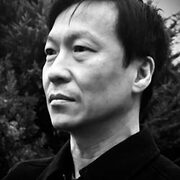








Learn how to use ZBrush’s ZModeler as efficiently as possible in this new workshop by Daniel Zeni. During 6 years of experience working in film, games, and consumer products, using ZBrush to bring characters to life, Daniel found that ZModeler revolutionized his workflow.
This workshop shares how he uses ZModeler to its full potential, covers the basics of ZModeler, shows the various ways to edit faces, verts, and edges, and discusses how to create any kind of topology you need in ZBrush — whether hard surface or organic. Throughout the workshop, Daniel details all the ZModeler techniques he believes every professional artist should know and demonstrates how to use them effectively. He also details several niche techniques, including how to use Insert NanoMesh using ZModeler. Once the character model is complete, Daniel finishes up by taking it into a final pose.
This video tutorial is intended for those already comfortable sculpting in ZBrush who want to create proper topology, speed up their workflow, or even just transition from traditional box modeling to modeling in ZBrush. Daniel’s ZBrush file is included with this workshop for subscribers to study the final model.
The concept Daniel Zeni uses in this workshop is by Anh Dang.
10 Lessons
In this course, Daniel Zeni presents ZModeler as a game-changing tool that bridges the gap between technical precision and artistic fluidity in 3D modeling. By combining theoretical foundations with hands-on project work, artists will learn to leverage ZModeler's unique capabilities to enhance their modeling workflow, potentially transforming their approach to 3D modeling, as it did for the instructor.
Duration: 1m 12s

ZModeler is a powerful topology manipulation tool that, while intimidating at first, becomes intuitive once artists understand its basic structure. By recognizing that all operations involve only faces, edges, or vertices and learning to navigate the spacebar menus, artists can accomplish virtually any modeling task they envision. Daniel explains why the key is to start with simple shapes and systematically apply the appropriate combination of options to achieve your desired result.
Duration: 5m 4s

The spotlight projection workflow in ZBrush is essential for accurately translating 2D concept art into 3D models. Artists will understand how overlaying the reference image and saving multiple custom views can maintain consistency and precision throughout the modeling process, setting the foundation for using ZModeler effectively to create shapes that faithfully match the original concept.
Duration: 2m 53s

This lesson emphasizes that successful work in ZModeler balances technical precision with artistic flexibility. Daniel's key lesson is that while maintaining clean topology is important, artists shouldn't be afraid to manipulate it to match their concept art and achieve organic shapes. By mastering isolation techniques (poly grouping and masking), understanding when to add supporting edge loops, and knowing core ZModeler operations, artists can efficiently create complex 3D forms from simple primitives while keeping their geometry manageable and clean.
Duration: 12m 56s

This lesson explores a practical, problem-solving approach to hard-surface character modeling, where perfection isn't always required up front. Artists will learn to work through modeling challenges as they arise, rather than restarting, by combining strategic topology management with efficient ZBrush tools. Daniel covers why it's important to build from simple shapes, add complexity only where necessary, and maintain clean topology through careful poly grouping and edge management.
Duration: 9m 9s

This lesson shows why successful hard surface and mechanical modeling relies on understanding fundamental principles rather than memorizing specific tricks. The core concept of matching topology between pieces, combined with thoughtful shape refinement and proper edge loop placement for deformation, allows artists to tackle diverse modeling challenges. While each piece presents unique problems, artists will understand why applying basic principles of topology management and reference-based shape refinement makes it easy to create complex mechanical components and organic forms alike.
Duration: 9m 14s

This lesson outlines a thoughtful, efficient approach to hard-surface modeling that prioritizes simplicity and clean topology management. By starting with basic shapes, reusing geometry intelligently, and adding complexity when necessary, Daniel shows how to create detailed mechanical components while maintaining control over the model. The key lesson is that good modeling isn't about complexity—it's about making smart decisions that keep workflows flexible and geometry manageable throughout the creative process.
Duration: 18m 33s

This lesson provides an overview of efficient hard-surface modeling techniques in ZBrush, with a focus on artistic vision over technical accuracy. Daniel demonstrates that complex mechanical designs can be broken down into simple geometric primitives, refined through the strategic use of topology tools, symmetry, and procedural modeling techniques. The key takeaway for artists is to balance clean topology management with creative problem-solving to achieve the desired aesthetic in concept art.
Duration: 16m 8s

This lesson focuses on a methodical approach to hard-surface modeling in ZBrush, demonstrating how complex mechanical models are built from simple shapes through careful refinement and strategic duplication. Daniel's philosophy of "trusting the process" is key; what begins as disconnected, floating pieces gradually transforms into a cohesive, functional-looking robot once joints and connecting elements are added. The combination of technical skills with artistic judgment results in a polished, professional-looking 3D character.
Duration: 24m 20s

In this final lesson, Daniel presents a comprehensive workflow for adding visual depth to hand-painted 3D models using fake shadow geometry, and explains how to prepare characters for posing. Daniel’s systematic approach to polygroup management and strategic use of ZBrush's gizmo tool enables flexible posing while maintaining the ability to revert or adjust individual components. These techniques are particularly useful for artists creating stylized characters with a finished look without setting up complex lighting rigs in external rendering software.
Duration: 24m 28s

Primary tools
For this workshop you’ll need:

* Note that these programs and materials will not be supplied with the course.
Project Files
When you download the workshop files, you'll get access to Daniel Zeni's Lantern Bot ZBrush project. Inside the package, you'll find:
- ZBrush sculpting files (.ztl) – The high-poly sculpted sword model and custom materials used for detailing
- Concept art file (.jpg) - An image of the concept design for the Lantern Bot
Skills Covered
Who’s this Workshop for?
This workshop is created for intermediate to advanced ZBrush artists who are already comfortable with basic sculpting techniques and want to expand their modeling capabilities. It's particularly valuable for professionals working in film, games, and consumer products who need to create production-ready topology efficiently.
Artists transitioning from traditional box modeling workflows will find this especially beneficial, as will those looking to speed up their current processes. Anyone seeking to master proper topology creation or explore ZBrush's more advanced modeling tools will gain significant workflow improvements and professional-level techniques.
Learning Outcomes
By completing this workshop, artists will master ZModeler's full potential for creating efficient, professional topology in both hard surface and organic modeling scenes.
Key skills include:
- How to navigate and utilize all essential ZModeler tools and interface elements effectively.
- How to edit faces, vertices, and edges with precision using advanced ZModeler techniques.
- How to create clean, production-ready topology for both hard surface and organic models.
- How to implement Insert NanoMesh workflows using ZModeler for complex detailing projects.
- How to transition efficiently from traditional box modeling approaches to ZBrush-based workflows.
- How to apply professional-level modeling techniques used in film, games, and consumer products.
- How to pose and finalize character models using integrated ZBrush tools and methods.


