
 Photoshop
 Houdini
 Blender
 Arnold
 Nuke
Nuke KeyShot
 V-Ray
V-Ray Marmoset Toolbag
 Mari
Mari Marvelous Designer
 Substance Designer
 3ds Max
 3DCoat
 Redshift
 Faceform Wrap
 Lightroom
 After Effects
 OctaneRender
 SpeedTree
 Daz 3D
 Agisoft Metashape
 Fusion
 Modo
Modo RealityCapture
 Gaea
Gaea Cinema 4D
 Gravity Sketch
 Premiere
 Procreate
 Clip Studio Paint
 SketchUp
 SketchBook
 Katana
 Natron
 Mudbox
 Quixel Bridge
 Quixel Mixer
 Substance 3D Modeler
 World Creator
 Yeti
Yeti Ziva VFX
 Mixamo
 Adobe Medium
 Quixel DDO
 xNormal
 Meshmixer
 Storyboard Pro
 DaVinci Resolve
 TreeIt
 World Machine
 Gaffer
 Corel Painter
 SynthEyes
 Krita
Krita Massive
 Materialize
 Unity
Unity Ornatrix
 PreForm
 Moi 3D
 animBot
 QuickTime
 ReCap
ReCap


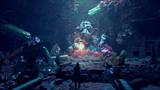














Learn how to master natural-looking environments in Unreal Engine 5 using up-to-date industry techniques. In this 4-hour workshop, Phil Stoltz, a Senior Environment Artist working in the videogame industry, reveals his tips and techniques for creating a photorealistic medieval castle scene.
The chapters of this workshop detail the environment creation pipeline. Using a wide range of software in addition to Unreal, including Maya, ZBrush, Substance Painter, and Megascans, Phil guides viewers through his complete thought process as he demonstrates several different environment-creation methods. Follow along from blocking out a scene to world-building, using sketches to plan everything out, and lighting scenes using Unreal’s new lighting system, Lumen.
Project files available with this workshop include Phil’s Maya file, ZBrush files, PureRef board, Photoshop concept, and his Unreal scene file (excluding purchased assets from Megascans).
8 Lessons
Phil Stoltz introduces his workshop by demonstrating that thorough reference gathering and planning are foundational to successful environment art projects. By collecting diverse references, from historical castles to game environments, and organizing them with a clear purpose, artists can learn how to make informed decisions while maintaining creative freedom. His key lesson is to invest time upfront in research and loose planning rather than diving directly into production, as this prevents wasted effort and helps maintain clear artistic direction throughout the project.
Duration: 13m 38s

The blockout stage is the most critical phase, during which artists should invest significant time in establishing proper scale, composition, and major forms. By maintaining a loose, iterative approach and resisting the temptation to add details prematurely, environment artists can learn how to build a solid foundation that supports subsequent layers of detail. Phil explains why the key is to work in stages, from sketch to rough blockout to refined measurements, ensuring the fundamental structure is strong before moving forward.
Duration: 7m 50s

This lesson emphasizes that successful world-building is fundamentally about understanding natural patterns and creating believable transitions. Whether working with modular kits, foliage systems, or decorative elements such as ivy, the key is to think in layers while maintaining technical efficiency. Phil's iterative approach, which involves constantly playtesting, evaluating against reference images, and refining placement, demonstrates that great environment art comes from patient, thoughtful iteration rather than rushing to add detail everywhere at once.
Duration: 43m 33s

This lesson demonstrates that effective world-building relies heavily on understanding natural transitions, thoughtful asset placement, and working efficiently by focusing on details where they matter most. Phil's approach of sketching first, solving problems in 2D before moving to 3D, and thinking constantly about how the player experiences the space results in believable, immersive environments. By layering elements thoughtfully and always considering sight lines and transitions, even complex scenes like castle ruins can be constructed in a manageable, systematic way.
Duration: 32m 54s

Vertex blending is an essential technique for environment artists who want to create large structures efficiently without creating numerous unique assets. The key to success lies in thoughtful material selection at appropriate scales, strategic use of height-map blending with multiple texture layers controlled through RGB masks, and organic painting that considers the macro shapes being created. By combining these techniques with decals and adjusting detail levels based on viewing distance, artists can learn how to create believable, varied surfaces on massive structures while maintaining performance and avoiding the time-consuming process of creating entirely unique geometry for every surface.
Duration: 20m 52s

The key to creating convincing stone and rock surfaces in ZBrush lies in a methodical approach that prioritizes asymmetry, varied damage patterns, and careful layering of details. Rather than relying solely on alphas for texture, Phil emphasizes that the final 20% of hand-sculpting and blending is what elevates the work from adequate to professional quality. By combining edge damage, planar surface variation, and thoughtfully integrated alphas while constantly referencing real-world stone imagery, artists can learn how to achieve believable stone assets suitable for production pipelines. This lesson successfully produces all the stone elements for the castle scene project.
Duration: 43m 37s

This lesson demonstrates that effective environmental lighting is an iterative process that requires constant refinement and testing, rather than a linear set of steps. Phil's approach of prioritizing mood and contrast over technical perfection, combined with frequent reference to concept art and in-game testing, results in a cohesive atmospheric scene. He explains why the key lesson is how restraint — particularly in color saturation and light intensity — often produces more compelling, believable results than dramatic, high-contrast lighting, especially when creating moody, mysterious environments.
Duration: 44m 21s

This final lesson demonstrates that effective lighting in Unreal Engine is less about technical complexity and more about artistic principles and experimentation. By selectively lighting objects, using complementary color theory, and carefully balancing values from dark (bottom) to light (top), artists can learn how to create scenes that feel both realistic and stylized. Phil's approach to "stylized realism" shows that treating your 3D scene like a painted artwork, with deliberate choices about what to illuminate and what colors to use, produces more visually interesting results than attempting pure photorealism.
Duration: 32m 20s

Primary tools
For this workshop you’ll need:


* Note that these programs and materials will not be supplied with the course.
Project Files
When you download the workshop files, you'll get access to a complete medieval castle environment project. Inside, you'll find:
- Unreal Engine project files (.uproject, .uasset, .umap) – A fully functional castle scene ready to explore and modify
- Photoshop project file (.psd) - The layered concept file so artists can see exactly how the artwork was built
- ZBrush sculpting files (.ztl) - High-resolution sculpts for the castle and architectural details that artists can study and iterate on
- Maya project files (.ma) - The base 3D models and scene setup
- PureRef reference boards (.pur) - Curated references showing the artistic direction and inspiration behind the medieval castle design - These project files have been provided by the instructor to make it easier to follow along with the workshop. –
Skills Covered
Who’s this Workshop for?
This workshop is crafted for intermediate to advanced 3D artists, environment artists, and game developers who want to elevate their Unreal Engine 5 skills. Those with basic knowledge of 3D modeling and texturing will benefit most from Phil Stoltz’s methods.
Concept artists transitioning to 3D, architectural visualization professionals, and students pursuing game development careers will also find tremendous value in these lessons. This approach provides a clear look at the real workflows professionals use to create game environments.
Learning Outcomes
At the conclusion of this workshop, artists will have mastered the pipeline for creating photorealistic medieval environments using current industry-standard techniques and tools.
Key skills include:
- How to block out and plan environment scenes using sketches and reference materials.
- How to integrate Maya, ZBrush, and Substance Painter into a cohesive environment workflow.
- How to effectively utilize Megascans assets within photorealistic environment compositions.
- How to implement the Lumen lighting system for realistic illumination in medieval scenes.
- How to approach world-building with professional planning and conceptualization methods.
- How to optimize environment assets for real-time rendering in Unreal Engine 5.
- How to execute complete environment creation from initial concept to final presentation.


