 Houdini
 Blender
 Unreal Engine
 Nuke
Nuke KeyShot
 V-Ray
V-Ray Marmoset Toolbag
 Mari
Mari Substance Designer
 3ds Max
 3DCoat
 Redshift
 Faceform Wrap
 Lightroom
 After Effects
 OctaneRender
 SpeedTree
 Daz 3D
 Agisoft Metashape
 Fusion
 Modo
Modo RealityCapture
 Gaea
Gaea Cinema 4D
 Gravity Sketch
 Premiere
 Procreate
 Clip Studio Paint
 SketchUp
 SketchBook
 Katana
 Natron
 Mudbox
 Quixel Bridge
 Quixel Megascans
 Quixel Mixer
 Substance 3D Modeler
 World Creator
 Yeti
Yeti Ziva VFX
 Mixamo
 Adobe Medium
 Quixel DDO
 xNormal
 Meshmixer
 Storyboard Pro
 DaVinci Resolve
 TreeIt
 World Machine
 Gaffer
 Corel Painter
 SynthEyes
 Krita
Krita Massive
 Materialize
 Unity
Unity Ornatrix
 PreForm
 Moi 3D
 animBot
 QuickTime
 ReCap
ReCap














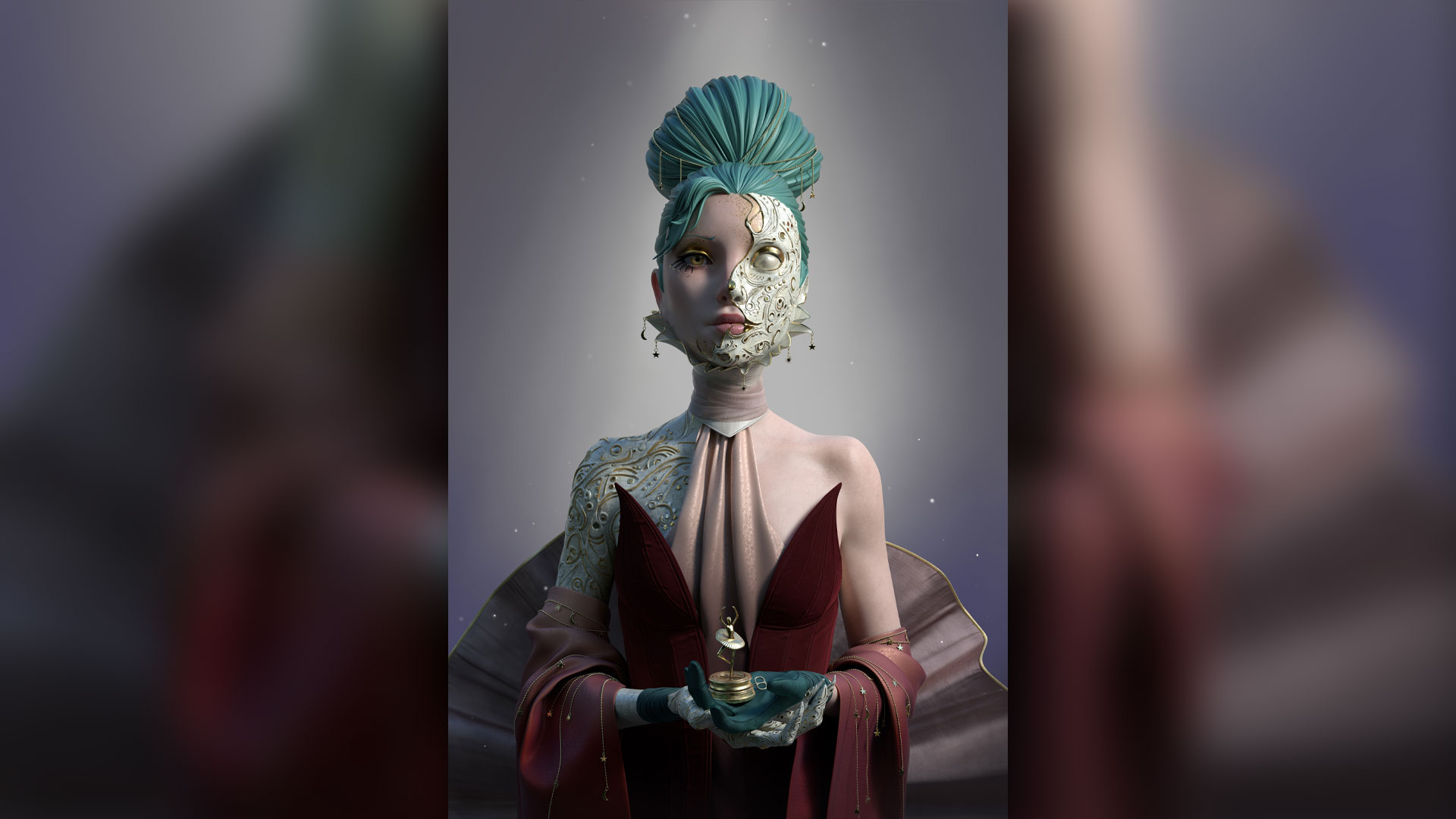
Explore the process of designing a character and bringing it to life as a final 3D image using ZBrush, Maya, and Substance Painter, with supporting design work handled in Marvelous Designer and Photoshop. This workshop by Senior Character Artist, Amy Sharpe, demonstrates her personal workflow while showcasing some of the production techniques she’s adapted to make her character design process quick, clean, and efficient at all stages.
The workshop begins with the loose sketching of concepts and compositions in Photoshop, sculpting in ZBrush, and covers a small amount of Marvelous Designer. Further modeling, retopology, and UV-ing work are then taken care of in Maya. The second half of Amy’s workshop includes her texturing workflow in Substance Painter, continued by her look development pipeline in Maya and Arnold, before wrapping up the final image in Photoshop.
This workshop is intended for late beginner to intermediate artists, though the general concepts discussed can be useful to artists of all levels. By the end of this tutorial, you will have an understanding of an efficient workflow that you can follow or adapt to your own process, making it easier for you to design and bring to life your own 3D characters.
16 Lessons
Amy Sharpe introduces her workshop with valuable insight into the conceptual and planning stages that precede actual 3D modeling and sculpting. She emphasizes that successful character art begins with strong foundational work in theme development, reference gathering, composition design, and understanding of color theory. By treating personal 3D work as illustration rather than just technical modeling, artists can create more compelling and cohesive final pieces that effectively communicate their intended story and emotional impact.
Duration: 13m 10s

This lesson explains why successful character creation requires patience during the awkward early stages and attention to anatomical accuracy, even in stylized work. Amy's approach of starting from basic geometry while constantly checking proportions and planes creates a solid foundation for detailed sculpting. Most importantly, the workflow demonstrates that character development is iterative: nothing is permanent, and adjustments can be made throughout the entire pipeline, from sculpting to final rendering.
Duration: 23m 59s

This lesson demonstrates a practical approach to hand sculpting that balances anatomical accuracy with stylistic choices. Amy emphasizes the importance of working from real-world references and understanding underlying bone and muscle structure while maintaining focus on the specific needs of the project. Her workflow showcases a solid foundation for creating believable hands that serve the character's overall aesthetic rather than pursuing unnecessary detail that won't be visible in the final piece.
Duration: 14m 10s

Amy's detailed sculpting process demonstrates a methodical approach to character creation that balances anatomical accuracy with stylistic choices. She emphasizes the importance of planning ahead, from using proper reference to considering how clothing and final materials will affect the sculpture, while maintaining flexibility to revise elements that don't serve the overall artistic vision. Her workflow shows how technical ZBrush skills combine with artistic decision-making to create a cohesive character design ready for the next stage of topology and detailed sculpting.
Duration: 28m 57s

Amy's retopology approach prioritizes workflow efficiency over production requirements, creating topology that supports her specific sculpting and texturing process. The key insight is designing the mesh density and edge flow to work seamlessly with ZBrush subdivision workflows while following real-world construction logic for UV seams. While not suitable for animation or rigging, this method enables faster iteration and cleaner results for portfolio character work.
Duration: 12m 37s

This lesson demonstrates the critical refinement phase where technical execution meets artistic vision. Amy stresses the importance of making strategic decisions about detail allocation, constantly evaluating the piece as a whole rather than getting lost in areas that won't contribute to the final image. Her iterative process of moving between sculpting, PolyPainting, and lighting tests shows how modern character creation requires flexibility and willingness to adjust elements throughout the pipeline rather than treating each stage as completely separate.
Duration: 16m 39s

This lesson demonstrates an efficient pipeline for creating realistic digital clothing by leveraging Marvelous Designer's simulation capabilities alongside traditional 3D modeling techniques. Amy's method allows artists to capture authentic fabric behavior and draping while maintaining clean, workable geometry for further sculpting and refinement. By treating Marvelous Designer as a starting point rather than a final solution, artists can achieve both realistic fabric simulation and the artistic control needed for high-quality digital garments.
Duration: 15m 8s

This lesson showcases Amy’s approach to detailed character sculpting, emphasizing the importance of maintaining flexibility throughout the creative process. Her iterative workflow and willingness to remake elements multiple times demonstrate how professional-quality work requires constant refinement and adjustment. The blend of technical precision with artistic intuition, particularly in balancing realistic fabric details with stylized character proportions, provides valuable insights for digital sculptors working on character design projects.
Duration: 26m 9s

This lesson emphasizes the importance of working efficiently by prioritizing areas that will have the most visual impact in the final render. Amy demonstrates that technical perfection isn't always necessary. Rather, strategic decision-making about where to invest time and effort is crucial for maintaining project momentum while achieving professional results. Her layered, non-destructive workflow allows for experimentation and revision without losing previous work.
Duration: 21m 39s

This lesson demonstrates that effective 3D character modeling often prioritizes gesture, proportion, and style over anatomical accuracy. Amy’s approach of starting with proper foundational shapes and continuously evaluating the piece from the intended viewing distance results in a charming, stylized ballerina that captures the essence of a music box figurine. Her emphasis on simplification and machine-made aesthetics shows how understanding your final goal influences every modeling decision throughout the process.
Duration: 15m 24s

Amy's eye setup demonstrates a practical approach to creating realistic 3D eyes that balances visual quality with artistic control and efficiency. The modular shader system allows for easy customization of key eye characteristics, while the simplified geometry approach makes it accessible for personal projects. Amy emphasizes that this is an evolving technique, acknowledging that different approaches, such as scan data or displacement maps, could be explored for various artistic needs.
Duration: 24m 40s

Amy's systematic approach to sculpted hair creation emphasizes efficiency and realism through layered detail building. Her workflow balances technical precision with artistic consideration, using low-resolution geometry and strategic overlapping to create natural-looking stylized hair. Amy's emphasis on working smart rather than perfectly makes this technique practical for production environments while still achieving high-quality results.
Duration: 12m 2s

This lesson demonstrates that successful look development is fundamentally about making thoughtful decisions through iteration rather than getting everything right from the start. Amy shows how stepping back to simplify overly complex elements, adding strategic connecting details, and working with a restrained approach to both lighting and color can lead to a more cohesive final result. The key lesson is maintaining flexibility throughout the process and being willing to make significant changes when elements aren't serving the overall vision.
Duration: 16m 23s

This lesson provides a complete pipeline for creating professional-quality stylized character textures that balance realism with artistic style. The layered approach in Substance Painter, combined with thoughtful shader setup in Maya, demonstrates how subtle details and proper technical execution can create rich, dimensional materials. The emphasis on experimentation and aesthetic choice over strict realism shows how stylized work can push creative boundaries while maintaining technical proficiency.
Duration: 31m 54s

This lesson demonstrates a professional approach to fabric texturing that balances realism with stylized aesthetics. Amy’s workflow emphasizes the importance of manual refinement over purely automated processes, showing how hand-painted details and careful shader construction can elevate the final result. The techniques shown, particularly the Facing Ratio method for fabric falloff and the strategic use of different shading approaches for various material types, provide a solid foundation for creating convincing fabric materials in 3D projects.
Duration: 30m 17s

The final editing stage should be kept simple, focusing on subtle enhancements rather than major corrections. Amy discusses how the key is using render passes strategically for targeted adjustments while maintaining lighting consistency. Most issues should be resolved during rendering, with post-processing reserved for minor touch-ups and atmospheric effects that enhance the piece's overall mood and storytelling.
Duration: 10m 44s

Primary tools
For this workshop you’ll need:


* Note that these programs and materials will not be supplied with the course.
Skills Covered
Who’s this Workshop for?
This workshop is designed for late beginner to intermediate 3D artists who want to develop efficient character-creation workflows. It's ideal for aspiring character artists, game developers, and digital sculptors who are ready to expand their technical skill set across multiple industry-standard software applications.
Artists at all levels will benefit from Amy Sharpe's production-proven techniques and streamlined approach to character development. Advanced artists can adapt these efficient workflows to speed up their existing processes, while beginners gain valuable insight into professional character creation pipelines used in studios worldwide.
Learning Outcomes
By completing this workshop, artists will have developed a comprehensive understanding of efficient character-creation workflows, from concept to the final rendered image.
Key skills include:
- How to develop initial character concepts through loose sketching and composition planning in Photoshop.
- How to sculpt detailed character forms efficiently using ZBrush's professional modeling and detailing tools.
- How to create realistic clothing and fabric elements using Marvelous Designer's simulation capabilities.
- How to perform clean retopology and UV mapping workflows for optimized geometry in Maya.
- How to texture characters professionally using Substance Painter's material authoring and painting systems.
- How to develop compelling looks through Maya's Arnold rendering pipeline and lighting setup.
- How to finalize and enhance rendered images using advanced Photoshop compositing and post-processing techniques.