
 Photoshop
 Maya
Maya ZBrush
 Substance Painter
 Blender
 Unreal Engine
 Arnold
 Nuke
Nuke KeyShot
 V-Ray
V-Ray Marmoset Toolbag
 Mari
Mari Marvelous Designer
 Substance Designer
 3ds Max
 3DCoat
 Redshift
 Faceform Wrap
 Lightroom
 After Effects
 OctaneRender
 SpeedTree
 Daz 3D
 Agisoft Metashape
 Fusion
 Modo
Modo RealityCapture
 Gaea
Gaea Cinema 4D
 Gravity Sketch
 Premiere
 Procreate
 Clip Studio Paint
 SketchUp
 SketchBook
 Katana
 Natron
 Mudbox
 Quixel Bridge
 Quixel Megascans
 Quixel Mixer
 Substance 3D Modeler
 World Creator
 Yeti
Yeti Ziva VFX
 Mixamo
 Adobe Medium
 Quixel DDO
 xNormal
 Meshmixer
 Storyboard Pro
 DaVinci Resolve
 TreeIt
 World Machine
 Gaffer
 Corel Painter
 SynthEyes
 Krita
Krita Massive
 Materialize
 Unity
Unity Ornatrix
 PreForm
 Moi 3D
 animBot
 QuickTime
 ReCap
ReCap





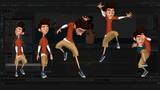











Learn how to create complex material simulations using a tried-and-tested production workflow. This step-by-step character FX workshop is taught by Salah Hussein, a senior FX and CFX artist with over 8 years of production experience. Salah’s 4-hour workshop guides artists through his professional workflow using the Houdini Vellum Solver to simulate 3D materials.
Using Salah’s unique and innovative techniques, he breaks down the entire process to show how to take character assets and animations – including multiple layers of cloth and different types of objects – and convert them into proxy geometry that works efficiently for a simulation. He also details how to build a constraints network to help artists fine-tune and debug simulations quickly while also advising how to address fixes with professional tips and tricks. To conclude the workflow, Salah demonstrates how to keep all the essential point deforms and the original geometry with a clean export without changing or damaging any attributes or topology.
By completing this workshop, artists will be confident in creating clothing assets for characters and understand how to make them dynamic using realistic cloth simulation in Houdini. Salah’s helpful Alembic and Houdini (Indie) files are provided as a downloadable resource for subscribers.
10 Lessons
During this lesson, Salah Hussein demonstrates that proper preparation and organization are important for successful cloth simulation. By separating, categorizing, and organizing geometry before simulation, artists can create a maintainable project structure that helps with both individual work and team collaboration.
Duration: 14m 57s

This lesson introduces an effective approach to creating cloth proxies. The remesh and poly reduce method preserves important surface features while producing a clean, uniform triangle topology that performs well in collision detection and cloth dynamics. Salah shows how to adjust and refine these settings based on the simulation’s requirements and the visibility of each clothing element.
Duration: 28m 28s

Salah presents a workflow for resolving geometry intersections in cloth simulations, recommending the VDB-based method due to its balance of accuracy and performance. By isolating and fixing problematic areas, artists maintain the integrity of the original geometry while ensuring clean simulations. The alternative solver-based method provides higher accuracy when needed, offering a positive trade-off for high-fidelity needs even if it requires more processing time.
Duration: 22m 24s

This lesson teaches an organized approach to setting up constraints for cloth simulation. By using procedural selection methods and horizontal node layouts, artists create more maintainable simulation setups. Salah establishes all basic constraints first, then refines the behavior through testing once the full character simulation runs, allowing for more informed decisions about stiffness, damping, and constraint strength values.
Duration: 25m 21s

Introducing the horizontal constraint method provides a complex multi-layer setup, allowing artists to isolate and refine individual elements rather than simulating everything simultaneously. Salah emphasizes that artists must review results, identify opportunities for optimization, and improve performance. Successful cloth simulation results from multiple iterations and problem-solving.
Duration: 24m 42s

Salah demonstrates that successful cloth simulation requires careful attention to geometry preparation, constraint setup, and problem-solving. The approach of fixing intersections at the animation stage, properly configuring pin and constraint systems, and using appropriate thickness values results in a significantly improved simulation. The final result shows realistic fabric behavior with proper draping, clean geometry, and natural movement ready for point deformation.
Duration: 38m 30s

This lesson integrates a sword prop into the simulation using a combination of rigid body and cloth simulation techniques. Salah demonstrates how to resolve collision issues by using geometry from a previous simulation or applying post-production fixes.
Duration: 18m 50s

This workflow combines simulated proxy geometry with the original high-resolution models, maintaining clean, intersection-free results. By treating different clothing elements using VDB-based collision and carefully managing point order, artists achieve procedural, repeatable solutions that integrate smoothly into production pipelines. Salah shows how to reach these results without requiring manual frame-by-frame cleanup.
Duration: 40m 19s

This lesson teaches artists how to handle complex character deformation issues in Houdini. Proper geometry preparation is essential for achieving clean, intersection-free deformations. Salah addresses each clothing piece individually while maintaining proper point order and geometry structure, providing a repeatable workflow for managing similar production challenges.
Duration: 44m

This is the final lesson where Salah’s thoughts provide a comprehensive CFX pipeline from input to final rendered output, with emphasis on a horizontal workflow that aids in debugging and iteration. This method offers flexibility for both independent artists and studio professionals who must adhere to strict pipeline requirements.
Duration: 7m 30s

Primary tools
For this workshop you’ll need:

* Note that these programs and materials will not be supplied with the course.
Project Files
The following project files are available with this workshop. Artists are given access to Salah Hussein's working files so they can follow along and practice the techniques demonstrated in the lessons:
- Houdini project files (.hiplc) – 9 chapter-based scene files that walk artists through the cloth simulation workflow
- Character animation (.abc) - A pre-animated character ready to be used as the foundation for the cloth simulations - These files are designed to let artists follow along with each workshop chapter, providing hands-on practice with professional cloth-simulation techniques in Houdini. –
Skills Covered
Who’s this Workshop for?
This workshop is designed for intermediate to advanced Houdini artists specializing in character effects, cloth simulation, and technical animation. FX artists, CFX specialists, and technical directors working in film, television, or game production will find Salah Hussein’s workflows invaluable for their projects.
3D artists looking to expand into character FX, generalists wanting to add cloth simulation skills, and students pursuing careers in visual effects will greatly benefit from this workshop. The techniques and professional workflows provide immediate value for creating high-quality character clothing simulations.
Learning Outcomes
By completing this workshop, artists will have mastered professional CFX workflows using Houdini for realistic cloth simulation.
Key skills include:
- How to convert character assets and animations into proxy geometry for simulation.
- How to build constraint networks for fine-tuning and debugging cloth simulations.
- How to simulate multiple cloth layers and different object types using Houdini’s Vellum Solver.
- How to troubleshoot common simulation issues using professional tips and production-tested techniques.
- How to export clean simulation results while preserving original geometry and essential attributes.
- How to maintain proper topology throughout the entire simulation workflow.
- How to optimize simulation performance for complex character assets in production environments.


