
 Photoshop
 Maya
Maya ZBrush
 Houdini
 Substance Painter
 Blender
 Unreal Engine
 Arnold
 Nuke
Nuke KeyShot
 V-Ray
V-Ray Marmoset Toolbag
 Mari
Mari Marvelous Designer
 Substance Designer
 3ds Max
 3DCoat
 Redshift
 Faceform Wrap
 Lightroom
 After Effects
 OctaneRender
 SpeedTree
 Daz 3D
 Agisoft Metashape
 Fusion
 Modo
Modo RealityCapture
 Gaea
Gaea Cinema 4D
 Gravity Sketch
 Premiere
 Procreate
 Clip Studio Paint
 SketchUp
 SketchBook
 Katana
 Natron
 Mudbox
 Quixel Bridge
 Quixel Megascans
 Quixel Mixer
 Substance 3D Modeler
 World Creator
 Yeti
Yeti Ziva VFX
 Mixamo
 Adobe Medium
 Quixel DDO
 xNormal
 Meshmixer
 Storyboard Pro
 DaVinci Resolve
 TreeIt
 World Machine
 Gaffer
 Corel Painter
 SynthEyes
 Krita
Krita Massive
 Materialize
 Unity
Unity Ornatrix
 PreForm
 Moi 3D
 animBot
 QuickTime
 ReCap
ReCap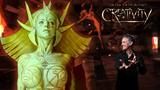
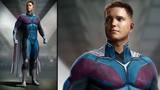
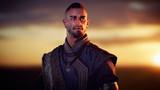

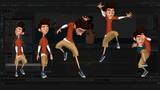








Learn the basics of Ziva VFX with a focus on building deformation rigs and developing workflow practices to help you quickly create production-ready creatures and characters. Instructor Madhav Shyam, Creature Supervisor at Ghost VFX, covers all the essential aspects of modeling, rigging and animation that you need to know to create realistic results.
With the modeling basics covered, Madhav dives into building an arm simulation rig from scratch. For this exercise, he uses the Sorceress Supreme model from Marcus Whinney as the base. The focus then shifts briefly to utilizing Python scripting in Maya to assist with the builds, before jumping into the final segment of the workshop: wrapping the asset and simulating the tissue. Using Ziva’s anatomy transfer tool, Madhav teaches how you can quickly morph their free assets into your own custom characters.
This workshop aims to teach all the necessary skills you need to build a production-ready Ziva simulation rig. In addition to the Sorceress Supreme model by Marcus Whinney, Madhav also uses the free Mr. Ink asset available from the Ziva store to those with an active Ziva VFX license.
Continue watching Introduction to Ziva VFX: Volume 2 and dive deeper into soft-tissue simulation to complete the build of the Sorceress character.
13 Lessons
In this workshop, Madhav Shyam discusses some of the fundamentals needed to work with Ziva VFX for tissue simulation in Maya. He explains how tissue nodes, bone geometry, material properties, and attachment systems work together to create realistic muscle and soft-body simulations. While Ziva offers powerful automated tools, Madhav emphasizes that mastering manual controls, like painted weights, material layers, and fiber endpoints, is key to achieving professional results in character animation and VFX.
Duration: 1h 28s

In this lesson, Madhav shows how to successfully implement Ziva VFX while coordinating modeling, rigging, and animation from the earliest stages. He emphasizes maintaining anatomical accuracy throughout the pipeline and ensuring artists see a faithful representation of the final simulation. By preparing geometry correctly, building anatomically informed secondary rigs, using quality reference, and employing efficient cached workflows, Madhav demonstrates how to create realistic character and creature simulations that enhance, rather than fight, the underlying animation.
Duration: 35m 35s

In this lesson, Madhav demonstrates the core workflow for creating anatomically driven muscle simulations in Ziva Dynamics. Using a practical bicep example, he covers the essential Ziva tools and components needed for realistic muscle deformation. He also emphasizes optimization techniques, like strategic Tet placement, collision control, and material zones, so artists can balance simulation quality with production-friendly speeds, providing a strong foundation for character effects work.
Duration: 30m 10s

In this lesson, Madhav demonstrates the core workflow for creating anatomically driven muscle simulations in Ziva Dynamics. Using a practical bicep example, he covers the essential Ziva tools and components needed for realistic muscle deformation. He also covers optimization techniques, like strategic Tet placement, collision control, and material zones, so artists can balance simulation quality with production-friendly speeds, providing a strong foundation for character effects work.
Duration: 31m 1s

In this lesson, Madhav continues building and simulating muscle in his demo arm, carefully balancing attachment strengths, mesh properties, and line-of-action sensitivity. The goal is to create piston-like muscle behavior with realistic sliding and volume changes, forming the foundation for later fat simulations. While it requires manual adjustments and testing, the result is a physically accurate muscle system that responds naturally to skeletal animation.
Duration: 45m 7s

In this lesson, Madhav demonstrates the iterative, problem-solving process behind muscle simulation. By continually testing and adjusting parameters like attachment strengths and collision settings, he achieves realistic muscle behavior. The finished simulation provides a solid foundation for the fat layer and serves as a reference for animators and supervisors to understand the mechanics driving the character's final deformation.
Duration: 45m 3s

This lesson demonstrates a professional Ziva VFX pipeline for creating anatomically driven fat simulations for characters. By systematically attaching fat to muscle with appropriate physical properties and attachment strategies, the workflow produces realistic arm deformation with muscle bulging, fat sliding, and even skin wrinkling. The methodology establishes reusable techniques that can be exported and applied to full character setups, making this exercise a valuable foundation for more complex character simulation work.
Duration: 55m

In this lesson, Madhav reviews his results from this end-to-end workflow for creating realistic arm deformation using Ziva dynamics, demonstrating the layered approach for muscle, fat, and finally skin simulations. While the wrinkle simulation included in the end adds subtle realism, particularly around joint areas, Madhav acknowledges its expensive simulation costs and suggests alternative methods, like stress maps, for production environments. Madhav's setup successfully captures organic motion including muscle sliding, compression, and secondary movement.
Duration: 21m 11s

In this lesson, Madhav demonstrates how to use mirroring and other Python utilities to streamline Ziva VFX workflows. By automating repetitive tasks, like mirroring setups, renaming nodes, and toggling simulation components, artists can focus more on creative work. Madhav notes that while these basic scripts cover the essentials, Ziva's documentation and community offer resources for building more advanced custom tools as needed.
Duration: 9m 33s

In this lesson, Madhav transfers attributes from the Ziva VFX asset Mr. Ink, over to his own custom models along with the correct associated Ziva files. The key to success lies in maintaining proper correspondence between source and target meshes through careful wrapping procedures, preserving naming conventions for Ziva compatibility, and methodically transferring each anatomical layer while validating results at each stage. Once complete, this process provides a fully rigged character with transferable Ziva simulation setups ready for animation-driven tissue dynamics.
Duration: 57m 18s

In this lesson, Madhav continues the process for transferring complex Ziva simulation setups from pre-built assets to custom characters, preserving detailed muscle compression and tissue dynamics. Madhav covers practical troubleshooting techniques, including Delta Mush corrections and targeted attachments that allow for shot-specific fixes without disrupting the core simulation setup. The result is production-quality character deformation with realistic muscle sliding, fat compression, and tissue jiggle transferred from the Mr. Ink Asset from Ziva VFX to a custom character rig.
Duration: 59m 45s

In this lesson, Madhav reviews the final results of the transfer process from the previous lessons, using exploded views of each layer to examine deformation outcomes. The workflow provides a powerful method to leverage existing simulation setups efficiently. Techniques like collision-free geometry and fixed tissue attachments give practical, widely applicable solutions for creating realistic character simulations across different projects.
Duration: 22m 47s

In this final lesson, Madhav reviews Ziva’s production pipeline as a foundational framework for character simulation. By understanding the full data flow, from animation curves through multiple simulation stages to final output, beginners gain essential insight into efficient workflows. As artists build experience, they can adapt and refine this methodology to meet the specific needs of any production, turning a solid foundation into a personalized, studio-ready pipeline.
Duration: 2m 43s

Primary tools
For this workshop you’ll need:
Project Files
When you download these comprehensive files, you'll get access to all the assets you need to follow the Maya and Ziva muscle-simulation pipeline shown in this workshop, including:
- Maya scene files (.ma) – Complete scenes with rigged characters, simulation setups, and various stages of the workflow you can open and explore
- Simulation cache files (.abc) - Pre-calculated muscle, fat, and skin simulations that can be referenced in your own projects
- Chapter-organized project files - Separate file sets for each workshop lesson (2–12), making it easy to jump to specific lessons and follow along with the instructor
- Reference materials - Video demos (.mov, .mp4), documentation (.pdf), and models (.obj) to help you understand and practice techniques and compare your work
Skills Covered
Who’s this Workshop for?
This workshop is designed for mid-level to advanced 3D artists, riggers, and character artists who want to learn Ziva VFX and muscle simulation fundamentals. It's perfect for professionals working in animation studios, VFX houses, or film and game development who need to create realistic character deformation and soft-tissue simulation.
Viewers are expected to have some level of basic Maya and rigging experience as this will allow artists to get the most out of this comprehensive workshop. The lessons inside provide essential production workflow skills that can translate directly to studio environments, making it valuable for anyone looking to advance their technical artistry in character development and simulation.
Learning Outcomes
By completing this workshop, artists will have developed essential Ziva VFX skills needed to build production-ready deformation rigs and create realistic muscle simulations.
Key skills include:
- How to set up basic Ziva VFX simulation rigs for realistic character deformation.
- How to model and prepare geometry specifically for soft-tissue simulation workflows.
- How to build comprehensive arm simulation rigs from scratch using industry-standard practices.
- How to integrate Python scripting into Maya for streamlined Ziva rig construction.
- How to wrap assets and simulate realistic tissue behavior using Ziva tools.
- How to utilize Ziva's anatomy transfer tool for custom character development.
- How to adapt free Ziva assets like Mr. Ink for production pipelines.


