
 Photoshop
 Maya
Maya ZBrush
 Substance Painter
 Blender
 Unreal Engine
 Arnold
 Nuke
Nuke KeyShot
 V-Ray
V-Ray Marmoset Toolbag
 Mari
Mari Marvelous Designer
 Substance Designer
 3ds Max
 3DCoat
 Redshift
 Faceform Wrap
 Lightroom
 After Effects
 OctaneRender
 SpeedTree
 Daz 3D
 Agisoft Metashape
 Fusion
 Modo
Modo RealityCapture
 Gaea
Gaea Cinema 4D
 Gravity Sketch
 Premiere
 Procreate
 Clip Studio Paint
 SketchUp
 SketchBook
 Katana
 Natron
 Mudbox
 Quixel Bridge
 Quixel Megascans
 Quixel Mixer
 Substance 3D Modeler
 World Creator
 Yeti
Yeti Ziva VFX
 Mixamo
 Adobe Medium
 Quixel DDO
 xNormal
 Meshmixer
 Storyboard Pro
 DaVinci Resolve
 TreeIt
 World Machine
 Gaffer
 Corel Painter
 SynthEyes
 Krita
Krita Massive
 Materialize
 Unity
Unity Ornatrix
 PreForm
 Moi 3D
 animBot
 QuickTime
 ReCap
ReCap



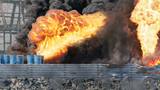










Learn about the powerful features in Houdini 18.5 and discover how to take advantage of the fast and efficient SOP-level Sparse Pyro tools for production-quality FX. From creating realistic smoke to a believable campfire, Volume 1 of Alasgar Hasanov’s two-volume workshop walks through the production workflows needed to create a variety of simulations.
Alasgar is a Senior FX Artist with over 6 years of experience working with Houdini. He provides an in-depth overview of all the new Source nodes and workflows along with a breakdown of the Pyro Solver settings and options you need to know for different types of pyro FX sims.
The workshop offers several case studies for artists to follow along. Starting with a small-scale pyro FX project involving some wispy smoke/dry ice FX, artists will learn how to create a lightly smoking source and a dry-ice effect source. For a larger-scale pyro FX case study, Alasgar then demonstrates how to recreate a realistic large-scale smoke simulation along with some efficient methods for matching references. The simulation processes are instructed as well as some interesting ways to render the final results.
From there, Alasgar offers techniques for pyro combustion fire sourcing and shares the important simulation settings, revealing how to efficiently create and source fields for fire as well as all other combustion-style sims. Learn how to create realistic small fire simulations, as well as voluminous fires with lots of smoke. Volume 1 of this workshop concludes with a demonstration showing how to create a realistic campfire simulation.
Included with this workshop are the Houdini project files for each chapter.
Continue your learning with Introduction to Pyro FX in Houdini: Volume 2..
8 Lessons
The Houdini 18.5 PyroFX workflow represents a significant improvement over earlier methods, offering faster performance, easier setup, and better integration within SOPs. The sparse calculation system and streamlined node structure make it much more efficient for both simple and complex simulations. Alasgar explains that this updated approach aligns with SideFX's direction for future Pyro development, making it essential for users to adopt these tools and workflows.
Duration: 32m 27s

This comprehensive lesson demonstrates that effective pyro simulation in Houdini requires understanding of both the technical pipeline (particles to volumes to simulation) and the artistic controls for enhancing realism. The key to professional results lies in properly sourcing the fundamental attributes like density, temperature, and velocity, and then using the Shape tab's Disturbance and Turbulence features to add natural-looking detail and breakup to the base simulation.
Duration: 49m 41s

This lesson provides essential techniques for creating professional-quality smoke simulations in Houdini by combining proper attribute management, advanced sourcing methods, and collision workflows. Alasgar emphasizes the importance of understanding attribute naming conventions, proper blending operations, and solver optimization to achieve realistic and visually appealing results. These techniques form the foundation for more complex pyro effects and demonstrate how multiple emission sources can interact dynamically within a single simulation.
Duration: 47m 32s

This comprehensive dry-ice simulation demonstrates the importance of understanding real-world physics when creating VFX. The key to realistic dry-ice behavior lies in combining negative buoyancy with expansion forces and proper temperature dynamics. The lesson emphasizes that successful pyro simulations require balancing multiple parameters from source animation and collision geometry to turbulence settings while always referencing real dry-ice footage for authenticity.
Duration: 49m 11s

Creating convincing large-scale industrial smoke requires a careful balance of multiple simulation parameters and a deep understanding of real-world smoke behavior. The key to success lies in proper emission setup, realistic motion scaling, and advanced parameter controls that mimic how heavy industrial smoke moves and dissipates. This technique provides a solid foundation for large-scale atmospheric effects in VFX work.
Duration: 45m 42s

This lesson demonstrates the complete workflow from simulation to final render, showing how to transform raw pyro simulations into production-quality smoke effects. Alasgar emphasizes practical optimization techniques for both simulation caching and rendering performance, while introducing advanced micro-solver concepts that provide artists with greater creative control. The comprehensive approach covers both technical implementation and artistic considerations, making it suitable for integration into live-action footage or standalone renders.
Duration: 41m 56s

This comprehensive fire-simulation lesson demonstrates that creating realistic flames requires careful attention to both source design and solver settings. The key insight is that fire simulation differs fundamentally from smoke simulation in its use of burn and temperature fields, and that much of the visual interest comes from proper source animation and the shredding feature rather than complex solver tweaking. The workflow emphasizes the importance of linking viewport appearance to final render materials for efficient iteration and consistent results.
Duration: 44m 3s

This last lesson showcases an advanced particle-to-pyro workflow that produces more realistic, controllable campfire effects than traditional direct-emission methods. The technique emphasizes the importance of proper sourcing, collision integration, and post-simulation shader control to achieve professional-quality fire simulations. Alasgar demonstrates how artistic flexibility can be maintained through shader-level adjustments, allowing for significant visual changes without costly re-simulation.
Duration: 38m 2s

Primary tools
For this workshop you’ll need:

* Note that these programs and materials will not be supplied with the course.
Project Files
When you download the workshop files, you'll get access to a comprehensive Houdini project package. Inside, you'll find:
- Houdini scenes (.hiplc) – Project files containing various versions of the Pyro effects setups presented in the workshop
- Text document (.txt) - A document containing the link to the campfire asset used for the campfire Pyro effects demo
- Texture image (.jpg) - The image used as a background plane in the large-scale smoke project file
Skills Covered
Who’s this Workshop for?
This workshop is designed for intermediate to advanced Houdini artists and VFX professionals looking to master the Sparse Pyro tools in Houdini 18.5. FX artists, technical directors, and simulation specialists seeking production-quality pyro workflows will find these lessons particularly valuable.
Motion graphics artists, game developers, and architectural visualization professionals working with fire and smoke effects will also benefit significantly. The workshop provides practical techniques and real-world case studies that translate directly to commercial projects, making it essential for anyone serious about advancing their pyro simulation skills.
Learning Outcomes
By completing this workshop, artists will have mastered the essential Sparse Pyro tools and production workflows needed for creating professional-quality fire and smoke simulations.
Key skills include:
- How to utilize Source nodes and workflows in Houdini 18.5 effectively.
- How to configure Pyro Solver settings for different types of simulation requirements.
- How to create realistic wispy smoke and dry-ice effects using efficient sourcing methods.
- How to build large-scale smoke simulations that accurately match photographic references.
- How to source and simulate combustion-style fire effects with proper field creation techniques.
- How to develop realistic campfire simulations with balanced fire and smoke elements.
- How to render volumetric pyro effects using production-ready techniques and workflows.


