
 Maya
Maya ZBrush
 Substance Painter
 Blender
 Arnold
 Nuke
Nuke KeyShot
 V-Ray
V-Ray Marmoset Toolbag
 Mari
Mari Marvelous Designer
 Substance Designer
 3ds Max
 3DCoat
 Redshift
 Faceform Wrap
 Lightroom
 After Effects
 OctaneRender
 SpeedTree
 Daz 3D
 Agisoft Metashape
 Fusion
 Modo
Modo RealityCapture
 Gaea
Gaea Cinema 4D
 Gravity Sketch
 Premiere
 Procreate
 Clip Studio Paint
 SketchUp
 SketchBook
 Katana
 Natron
 Mudbox
 Quixel Bridge
 Quixel Megascans
 Quixel Mixer
 Substance 3D Modeler
 World Creator
 Yeti
Yeti Ziva VFX
 Mixamo
 Adobe Medium
 Quixel DDO
 xNormal
 Meshmixer
 Storyboard Pro
 DaVinci Resolve
 TreeIt
 World Machine
 Gaffer
 Corel Painter
 SynthEyes
 Krita
Krita Massive
 Materialize
 Unity
Unity Ornatrix
 PreForm
 Moi 3D
 animBot
 QuickTime
 ReCap
ReCap
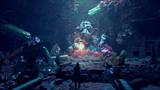


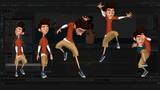











Create an impressive dissolving character VFX sequence in Unreal Engine using Houdini and Photoshop. This 2-hour workshop by Principal VFX Artist Antonio Cappiello is ideal for beginner and mid-level real-time VFX artists who want to learn procedural low-poly modeling techniques, create RBD simulations, and pack flipbooks into a sprite sheet in Houdini. Those who want to go beyond basic Niagara particle systems functions will also find this a useful guide.
This step-by-step workshop offers a brief look at frame-by-frame animation in Photoshop, showing how to work with the Timeline, the Lasso tool, and how to apply filters and effects to the texture. You’ll see how to model and fracture assets in Houdini and learn how to import them into Unreal Engine and place them in a level. Antonio reveals his process for creating materials in Unreal and teaches how to create environment Niagara particle systems. He also demonstrates how to create dissolving materials and how to paint animated smoke using Photoshop.
The final stage of the workshop reveals how to import flipbooks into Unreal Engine and create materials and emitters before creating the final level sequence and placing and animating the material parameters and particle systems. As the last step, you’ll discover the final tweaks and see how to add an effective camera shake and grain effect.
Basic knowledge of Houdini, Photoshop, and Unreal Engine is ideal; however, the tutorial is designed to show basic shortcuts and functions so you can follow along with every step of the workshop. All of Antonio’s Houdini, Photoshop, and Unreal files shown in the workshop are included as downloadable files with this workshop.
15 Lessons
This introductory lesson to Antonio's workshop discusses how he will teach industry-proven techniques from his experience as a professional artist. Antonio's diverse background across different game styles and his emphasis on creative experimentation allow him to share both technical proficiency and artistic insights. His structured approach using premade assets and multiple industry-standard software tools provides a practical, hands-on learning experience focused on cinematic VFX creation.
Duration: 2m 53s

This lesson presents a professional workflow for creating atmospheric, low-poly cinematics by combining the strengths of multiple industry-standard tools. Antonio's focus on simple geometric forms, enhanced by dramatic lighting and volumetric effects, demonstrates how technical proficiency across different software can be leveraged to achieve a cohesive artistic vision. His project serves as a comprehensive example of modern real-time rendering and VFX production techniques.
Duration: 2m 53s

This lesson establishes a foundational workflow for lighting setup in Unreal Engine 5, prioritizing mood creation early in the development process. Antonio demonstrates how proper exposure control and basic lighting elements can create a dramatic atmosphere that serves as a solid foundation for further asset development. His organized approach to scene setup and asset management provides a clean starting point for more complex lighting work in subsequent lessons.
Duration: 10m 9s

This lesson provides a comprehensive introduction to procedural prop modeling in Houdini for game development. Antonio demonstrates how to combine basic geometric operations with Boolean cutting techniques to create detailed, game-ready assets. His emphasis on proper organization, UV mapping, and export preparation shows professional workflow practices essential for successful asset creation in a game development pipeline.
Duration: 20m 37s

This lesson focuses on creating a complete cable system that integrates with a sci-fi chamber environment. The procedural approach enables easy iteration and customization while maintaining proper UVs and materials for game-engine implementation. Antonio's workflow demonstrates efficient techniques for creating both hero assets and supporting environmental elements, such as background cables, that work together to tell the story of an energy transfer system.
Duration: 10m 31s

This lesson showcases an efficient procedural modeling approach in Houdini for creating game-ready assets. The lamp, while simple in design, demonstrates key modeling techniques including shape manipulation, extrusion workflows, and proper material assignment. The asset is specifically designed to integrate with Unreal Engine's lighting system and will enhance the scene's overall atmospheric lighting.
Duration: 5m 49s

This lesson effectively demonstrates how to combine character animation with procedural destruction in Houdini, creating a compelling effect where a walking character breaks apart upon collision. The workflow showcases the power of Houdini's procedural approach, enabling realistic physics simulation while maintaining control over when and how destruction occurs. The final export process ensures the simulation can be easily integrated into game development pipelines for real-time applications.
Duration: 14m 9s

This lesson focuses on the technical process of transitioning 3D assets from Houdini to Unreal Engine while maintaining proper scale, lighting, and environmental storytelling. Antonio demonstrates how thoughtful placement and duplication of assets, combined with strategic lighting adjustments, can create a convincing chamber environment that suggests a narrative through visual details such as debris and connected machinery. The next lesson will cover the material creation and application process for these imported assets.
Duration: 7m 58s

This lesson demonstrates how to create realistic materials for sci-fi laboratory props using efficient techniques, such as cube map reflections, rather than expensive real-time reflections. The key takeaway is the strategic layering of effects, combining fake reflections, animated textures, and proper opacity controls to create convincing glass, cables, and lighting materials. These techniques prioritize visual impact while maintaining performance, making them ideal for game environments and real-time applications.
Duration: 8m 46s

This lesson demonstrates how particle systems can effectively enhance environmental storytelling and add dynamic movement to static scenes. By starting with built-in templates and strategically adjusting parameters like spawn rate, lifetime, and physics properties, artists can create compelling atmospheric effects that support the overall narrative without overwhelming the main visual elements. The key is maintaining proper visual hierarchy and ensuring secondary effects remain subtle yet noticeable.
Duration: 7m 50s

This lesson demonstrates a sophisticated VFX pipeline that combines material shaders, custom particle systems, and vertex animation to create a cohesive materialization/dematerialization effect. The key to success lies in maintaining synchronization between the “dissolve” material and particle spawning through shared parameters and identical sampling logic. Antonio will walk through additional particle effects in the next lesson to further enhance the visual impact of this character VFX system.
Duration: 12m 22s

This lesson demonstrates how traditional 2D animation techniques in Photoshop can be effectively integrated into modern 3D VFX workflows. By creating hand-drawn flipbook animations that are later converted to sprite sheets for particle systems, artists can add unique, stylized details that enhance the impact of larger effects. The workflow emphasizes efficiency and reusability, with techniques such as grayscale artwork and modular frame counts enabling flexible implementation across different projects.
Duration: 6m 42s

This lesson effectively bridges traditional 2D animation techniques with modern real-time rendering engines. By combining Photoshop's animation capabilities, Houdini's sprite sheet packing tools, and Unreal Engine's particle systems, artists can create sophisticated visual effects that maintain the artistic control of hand-drawn animation while leveraging the performance benefits of sprite-based rendering. The multi-emitter approach demonstrates how layering different effect types can produce complex, visually striking results that help achieve effects such as teleportation.
Duration: 9m 41s

This lesson demonstrates the power of Unreal Engine's Level Sequencer for creating complex VFX sequences by combining multiple animated elements. The workflow emphasizes proper organization, parameter animation, and event-driven effects to create a cohesive narrative sequence. In the final lesson, Antonio will walk through adding finishing touches, such as camera shake and fade transitions, to complete the cinematic experience.
Duration: 10m 9s

This lesson demonstrates how small cinematic touches can significantly enhance the visual impact and professional quality of a 3D scene. By combining subtle camera movement, well-timed camera shake, and polished fade transitions with film grain, creators can transform static scenes into dynamic, cinematic experiences. Antonio explains why these final touches are essential for achieving a professional, movie-like quality in digital projects.
Duration: 5m 33s

Primary tools
For this workshop you’ll need:


* Note that these programs and materials will not be supplied with the course.
Project Files
When you download the workshop files, you'll get access to a complete Unreal Engine project. Inside, you'll find:
- Unreal Engine project files (.uasset, .umap) – A fully configured project with materials, textures, and scene setups, including starter maps and built lighting data
- 3D models of the character & props (.fbx) - Ready-to-use character skeletons and meshes that you can animate and customize
- Professional textures & materials (.png, .tga, .psd) - High-quality decals and flipbook animations for 2D effects
- Houdini integration file (.hiplc) - Advanced procedural modeling setups that connect with the Unreal project for complex effects workflows
Skills Covered
Who’s this Workshop for?
This workshop is designed for beginner to mid-level real-time VFX artists seeking to expand their technical skillset in procedural modeling and advanced particle systems. Game developers, technical artists, and VFX professionals working in real-time environments will find this comprehensive approach particularly valuable.
Artists familiar with basic Niagara functions who want to push beyond standard particle systems will benefit significantly from this advanced workflow. The integration of Houdini's procedural capabilities with Unreal Engine's real-time rendering makes this essential knowledge for modern VFX production pipelines.
Learning Outcomes
By completing this workshop, artists will master a complete pipeline for dissolving character VFX using industry-standard tools and professional techniques.
Key skills include:
- How to create procedural low-poly models and RBD simulations in Houdini effectively.
- How to pack flipbooks into optimized sprite sheets for real-time applications.
- How to create frame-by-frame animations using Photoshop's Timeline and advanced tools.
- How to import and fracture Houdini assets seamlessly into Unreal Engine levels.
- How to develop dissolving materials and advanced Niagara particle systems in Unreal.
- How to animate material parameters and create cinematic sequences with camera effects.


