
 Photoshop
 Maya
Maya ZBrush
 Houdini
 Substance Painter
 Blender
 Unreal Engine
 Arnold
 Nuke
Nuke KeyShot
 V-Ray
V-Ray Marmoset Toolbag
 Mari
Mari Marvelous Designer
 Substance Designer
 3ds Max
 3DCoat
 Redshift
 Faceform Wrap
 Lightroom
 After Effects
 OctaneRender
 SpeedTree
 Daz 3D
 Agisoft Metashape
 Fusion
 Modo
Modo RealityCapture
 Gaea
Gaea Cinema 4D
 Gravity Sketch
 Premiere
 Procreate
 Clip Studio Paint
 SketchUp
 SketchBook
 Katana
 Natron
 Mudbox
 Quixel Bridge
 Quixel Megascans
 Quixel Mixer
 Substance 3D Modeler
 World Creator
 Yeti
Yeti Ziva VFX
 Mixamo
 Adobe Medium
 Quixel DDO
 xNormal
 Meshmixer
 Storyboard Pro
 DaVinci Resolve
 TreeIt
 World Machine
 Gaffer
 Corel Painter
 SynthEyes
 Krita
Krita Massive
 Materialize
 Unity
Unity Ornatrix
 PreForm
 Moi 3D
 animBot
 QuickTime
 ReCap
ReCap

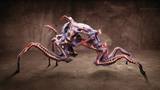
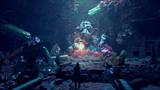
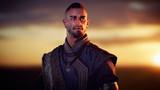










Design an immersive world using Blender, 3D-Coat, and Photoshop with this 3-hour workshop by Senior Artist Jannis Mayr. This intermediate to advanced-level workshop reveals Jannis’s techniques for creating fantastical worlds, detailing the creation of a final keyframe in detail, from start to finish. This comprehensive tutorial delves into both his creative and technical processes so you’ll understand the whys as well as the hows.
Beginning with gathering and organizing references, Jannis shares how to kickstart your project before sketching out shapes and compositions for your environment. With the initial sketches completed, Jannis then jumps into 3D-Coat to reveal how he builds a kitbash set, utilizing the software’s powerful voxel-sculpting engine to create complex shapes and organic textures efficiently.
Blender is the backbone for Jannis’ environment design workflow, providing everything necessary to help him explore the world he is building. He shows how to set up a scene and where to place the cameras to render a base image for the final paintover in Photoshop. Everything from modeling, sculpting, shading, rendering, and photobashing, to color grading and Jannis’ finishing tips and tricks are covered in this workshop. As a bonus, he provides a short insight into some quick character-creation techniques in ZBrush and Blender.
The final Blender Scene and Jannis’ Photoshop file are included as project files with this workshop so you can take a closer look at his working files.
7 Lessons
Jannis Mayr introduces his workshop, demonstrating how effective reference gathering is a crucial pre-production step that involves casting a wide net of inspiration while gradually focusing on specific elements. He discusses how maintaining an organized reference board can help guide the creative process from concept to execution, ultimately serving as a visual foundation for achieving a more artistic, painterly final result rather than a purely digital look.
Duration: 9m 26s

The sketching phase serves as an exploratory foundation rather than a definitive plan, with Jannis maintaining flexibility and openness to change. By creating multiple iterations and preserving various ideas within layer groups, he builds a visual library that informs, but does not restrict, the 3D modeling phase. He focuses on identifying compelling shapes and compositional concepts to inspire the final work, sharing why the real refinement will occur in the 3D environment, where perspectives and details can be developed more effectively.
Duration: 8m 19s

This lesson prioritizes artistic freedom and organic detail over technical precision, using voxel sculpting to create modular assets with natural imperfections. While this process is destructive and generates high-poly meshes, Jannis demonstrates practical solutions through decimation, retopology, and efficient material systems. His combination of 3D-Coat's sculptural approach with Blender's procedural shading creates a flexible pipeline for building detailed, kit-bashable scene elements suitable for concept art and environment design.
Duration: 43m 14s

This lesson reveals why successful 3D environment concept art requires balancing technical constraints with artistic vision. Jannis's iterative process of building in 3D, evaluating in 2D through paint-overs, and refining back in 3D proves essential for catching compositional issues that may not be apparent in the 3D viewport alone. His workflow emphasizes practical problem-solving, from creative UV stretching for quick texturing to the strategic use of fog and lighting to create depth. He explains why "quick and dirty" solutions are sometimes acceptable when they meet the final image's needs.
Duration: 38m 6s

This lesson establishes a professional rendering workflow that prioritizes post-processing flexibility over single-pass convenience. By rendering separate collections with proper visibility settings and multiple passes, artists can gain granular control over their final composite in Photoshop. Jannis's 16-bit workflow and comprehensive pass setup may increase render times and file sizes, but he explains why it provides the dynamic range and selection options necessary for high-quality concept art and DMP work that can withstand substantial color grading and adjustment.
Duration: 9m 43s

This lesson showcases a professional hybrid workflow that seamlessly integrates 3D rendering with traditional digital painting and photo manipulation techniques. The key lesson is that successful concept art doesn't require choosing between 3D and 2D methods. Instead, each technique should serve the image's needs to achieve the best result. By maintaining organized layers, working non-destructively, and strategically combining renders with painted details and photographic textures, artists can learn how to create compelling scenes that feel both epic and believable while retaining maximum flexibility for revisions.
Duration: 36m 29s

This final lesson highlights a professional concept art workflow that prioritizes iteration and refinement over getting everything perfect initially. Jannis demonstrates that creating epic, believable fantasy environments requires patience to repeatedly move between 3D and 2D tools, integrate multiple sources (3D renders, photos, painting), and apply technical knowledge of atmospheric perspective, color theory, and post-processing effects. He discusses why a willingness to make major changes late in the process — even considering flipping the entire composition — is important for staying flexible and critical of your work until the final moment.
Duration: 22m 48s

Primary tools
For this workshop you’ll need:
Project Files
When you download the workshop files, you'll get access to Jannis Mayr's complete environment concept workflow, including both 2D and 3D components. Inside, you'll find:
- Blender project file – The full 3D scene with modeling, lighting, and camera setups used in the workshop
- Photoshop design file - Concept art layers, textures, and digital painting elements for reference and modification
Skills Covered
Who’s this Workshop for?
This workshop is designed for intermediate to advanced 3D artists, concept designers, and environment artists who want to elevate their world-building skills. Artists with foundational knowledge of Blender, 3D-Coat, and Photoshop will gain significant value from Jannis Mayr's advanced techniques.
Game developers, film pre-production artists, and digital illustrators looking to expand their technical toolkit will find tremendous benefit in this masterclass. Covering the full process from modeling to final paintover, the workshop provides practical insights into professional production workflows; empowering artists to create immersive, high-quality environments with confidence and efficiency.
Learning Outcomes
On completing this workshop, artists will have mastered a complete pipeline for creating immersive fantastical environments from initial concept through to final rendered artwork.
Key skills include:
- How to gather, organize, and utilize reference materials effectively for environment design projects.
- How to sketch compelling compositions and establish strong foundational shapes for 3D environments.
- How to build efficient kitbash sets using 3D-Coat's voxel-sculpting engine for complex geometry.
- How to set up optimized Blender scenes with proper camera placement for keyframe rendering.
- How to integrate modeling, sculpting, shading, and rendering workflows within a single production pipeline.
- How to enhance 3D renders through photobashing, color grading, and paintover techniques in Photoshop.
- How to apply quick character creation methods using ZBrush and Blender for populated scenes.


