
 Photoshop
 Maya
Maya ZBrush
 Houdini
 Substance Painter
 Blender
 Unreal Engine
 Arnold
 Nuke
Nuke KeyShot
 V-Ray
V-Ray Marmoset Toolbag
 Mari
Mari Marvelous Designer
 Substance Designer
 3ds Max
 3DCoat
 Redshift
 Faceform Wrap
 Lightroom
 After Effects
 OctaneRender
 SpeedTree
 Daz 3D
 Agisoft Metashape
 Fusion
 Modo
Modo RealityCapture
 Gaea
Gaea Cinema 4D
 Gravity Sketch
 Premiere
 Procreate
 Clip Studio Paint
 SketchUp
 SketchBook
 Katana
 Natron
 Mudbox
 Quixel Bridge
 Quixel Megascans
 Quixel Mixer
 Substance 3D Modeler
 World Creator
 Yeti
Yeti Ziva VFX
 Mixamo
 Adobe Medium
 Quixel DDO
 xNormal
 Meshmixer
 Storyboard Pro
 DaVinci Resolve
 TreeIt
 World Machine
 Gaffer
 Corel Painter
 SynthEyes
 Krita
Krita Massive
 Materialize
 Unity
Unity Ornatrix
 PreForm
 Moi 3D
 animBot
 QuickTime
 ReCap
ReCap


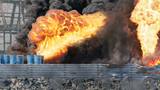












Discover how professional artists working in feature films use paint-overs and projections to speed up their workflow, allowing for more techniques to be accomplished in compositing without needing to jump back into 3D. Generalist Nacho Thomas shares non-destructive techniques to help artists level up their renders by creating comp-friendly projections using AOV sequences in Nuke.
This 7-hour workshop demonstrates production-ready techniques using non-destructive workflows. You’ll discover efficient solutions to create your own projections, giving you more time to focus on your art. Nacho begins with an overview of the Maya process, emphasizing how to work with large environments and handle the AOV outputs. Arnold is used to render, though the techniques demonstrated are common to most renderers. Nacho then progresses to Nuke, where the focus of this workshop lies. The workflow involves occasionally jumping into Photoshop to handle any digital painting work.
This tutorial is intended for both 2D and 3D artists looking to advance their skills; generalists and environment artists with some working knowledge of Nuke will also greatly benefit from the techniques showcased. In the Nuke segment of this workshop, you’ll learn how to work with an AOV sequence. You will discover how to build your own tools in Nuke, and create your own production-ready tools to add to your workflow. Nacho’s Nuke master file and three sequences used for the shot (Beauty, Utility, and Volumetrics) with light groups and all necessary passes to follow along are provided with this workshop as downloadable project files.
11 Lessons
In this workshop, Nacho Thomas explains how feature film artists use compositing techniques like paint-overs and projections to work faster without sacrificing quality. By relying on strong fundamentals and practical, ready-made tools, artists can achieve polished results while keeping the flexibility to adjust lighting and color even after projection painting is finished. This workflow offers a proven, production-tested solution to common VFX bottlenecks.
Duration: 5m 8s

In this lesson, Nacho discusses how professional VFX artists efficiently handle tight deadlines and budgets through smart technique selection. By combining projection mapping with strategic paint-over work, artists can transform basic renders into detailed, cinematic shots in remarkably short timeframes.
Duration: 7m 56s

In this lesson, Nacho takes a pragmatic approach to VFX production that prioritizes efficiency over traditional perfectionism in 3D modeling. By strategically using kitbash assets, stand-ins, and deferring quality enhancements to the compositing stage, he demonstrates how artists can achieve professional results on limited hardware and tight deadlines.
Duration: 35m 57s

In this lesson, Nacho demonstrates techniques for optimizing render efficiency and compositor-friendly deliverables. By separating renders into logical passes with appropriate bit depths and organizing lights into controllable groups, the pipeline minimizes file sizes while maximizing creative flexibility downstream. He illustrates how using procedural scattering, proper EXR organization, and separate volumetric passes reflects real-world VFX production standards that balance technical efficiency with artistic control.
Duration: 42m 59s

In this lesson, Nacho walks through professional VFX workflows that prioritize quality control and fast iteration. By carefully reviewing test renders before committing to full sequences and using projection-based painting, he shows how artists can complete most of a shot’s final look much faster than traditional methods. Although projection painting has limits, it offers huge flexibility for last-minute changes and fits smoothly into existing compositing pipelines without slowing down other departments.
Duration: 30m 2s

In this lesson, Nacho's workflow shifts from traditional compositing approaches by prioritizing mathematical consistency throughout the pipeline. By manipulating the diffuse albedo, he shows how artists can make significant changes to asset appearance (from simple color shifts to complex dirt and wear painting). This approach produces more realistic results and preserves flexibility for downstream corrections, ensuring that compositors can continue to adjust light groups and other elements without breaking the mathematical relationships established during rendering.
Duration: 36m 16s

Nacho covers the concepts behind building effective tools in Nuke in this lesson, a process that requires understanding both the technical framework and practical user considerations. The key is starting with a clear purpose, building the interior functionality first, then carefully exposing only necessary controls while implementing fail-safes for unexpected usage. Mastering TCL expressions and understanding nodes like ST Map and Expression are fundamental skills that enable creation of sophisticated, production-ready tools.
Duration: 46m 1s

In this lesson, Nacho continues to discuss tool creation in Nuke, working toward finishing a tri-planner projection system, (which follows logical principles based on manipulating position and normal data to create axis-aligned ST maps). He shows how to convert continuous world-space coordinates into repeating 0-1 ranges that can be used for texture projection, and how to mask these projections based on surface normals. Adding user controls for tiling, translation, rotation, and scaling; Nacho shows how you can create a production-ready tool with intuitive parameters.
Duration: 55m 48s

In this lesson, Nacho examines how artists can utilize a projection workflow to enhance their 3D renders. By leveraging position passes and painting albedo modifications, Nacho demonstrates how to work non-destructively, maintain full control over lighting, and complete complex shot work faster. The method is effective for destruction, weathering, and environmental detailing where traditional UV texturing or card-based projections would be prohibitively time-consuming or technically impossible.
Duration: 36m 26s

In this lesson, Nacho presents a professional DMP projection workflow. The P-world projection technique, developed by Michael Garrett in 2010, remains the industry standard because it allows painted elements to stick properly to surfaces across multiple frames without geometric limitations. By carefully managing overscan, creating proper projection cameras, and using sophisticated masking techniques to eliminate echoes, Nacho shows how artists can efficiently paint onto 3D scenes while maintaining the ability to see real-time feedback in their composite.
Duration: 49m 38s

In this final lesson, Nacho demonstrates a non-destructive, industry-standard compositing workflow that keeps beauty passes and AOVs consistent while allowing fast iteration during look development. By projecting painted textures and using light-group color correction tools, he shows how to efficiently add weathering and fine detail to 3D renders. The workflow’s key strength is its reversibility and compatibility with downstream compositing, letting teams adjust individual light groups and AOV passes with confidence that the underlying mathematical relationships remain intact.
Duration: 54m 9s

Primary tools
For this workshop you’ll need:
Project Files
When you download this workshop package, you'll get access to the full compositing project shown in these lessons with all the assets used. Included with these, you'll find:
- Maya scene file (.mb) – The complete 3D project setup with all models, lighting, and animation ready for you to explore
- Nuke compositing scripts (.nk) - Pre-built node trees for each section of the workshop, so you can jump to any lesson
- High-resolution render passes (.exr files) - EXR sequences including beauty, utility, and volumetric passes from Nacho's NYC scene
Skills Covered
Who’s this Workshop for?
This workshop is designed for intermediate to advanced 2D and 3D artists working in film, TV and VFX productions. Generalists and environment artists with strong foundational knowledge of Nuke and compositing will find the lessons and professional techniques shown here easier to approach, allowing them to improve their compositing workflows.
The non-destructive techniques taught here will help artists spend more time creating sophisticated final images while reducing the time spent jumping between software applications to get the result artists are looking for. Artists looking to build a strong pipeline between 3D rendering and compositing will greatly benefit from these production-ready methods.
Learning Outcomes
By completing this workshop, artists will have mastered professional paint-over and projection techniques used in feature film production to enhance renders efficiently.
Key skills include:
- How to set up Maya environments and optimize AOV outputs for compositing workflows.
- How to use Arnold rendering techniques that effectively translate across multiple render engines.
- How to work with AOV sequences in Nuke for non-destructive compositing enhancements.
- How to build custom production-ready tools and workflows within Nuke for efficiency.
- How to create comp-friendly projections that eliminate the need for 3D iterations.
- How to integrate Photoshop paint-overs seamlessly into professional compositing pipelines.


