
 Photoshop
 Maya
Maya ZBrush
 Houdini
 Substance Painter
 Blender
 Unreal Engine
 Arnold
 Nuke
Nuke KeyShot
 V-Ray
V-Ray Marmoset Toolbag
 Mari
Mari Marvelous Designer
 Substance Designer
 3ds Max
 3DCoat
 Redshift
 Faceform Wrap
 Lightroom
 After Effects
 OctaneRender
 SpeedTree
 Daz 3D
 Agisoft Metashape
 Fusion
 Modo
Modo RealityCapture
 Gaea
Gaea Cinema 4D
 Gravity Sketch
 Premiere
 Procreate
 Clip Studio Paint
 SketchUp
 SketchBook
 Katana
 Natron
 Mudbox
 Quixel Bridge
 Quixel Megascans
 Quixel Mixer
 Substance 3D Modeler
 World Creator
 Yeti
Yeti Ziva VFX
 Mixamo
 Adobe Medium
 Quixel DDO
 xNormal
 Meshmixer
 Storyboard Pro
 DaVinci Resolve
 TreeIt
 World Machine
 Gaffer
 Corel Painter
 SynthEyes
 Krita
Krita Massive
 Materialize
 Unity
Unity Ornatrix
 PreForm
 Moi 3D
 animBot
 QuickTime
 ReCap
ReCap
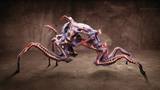








In this workshop, Concept and Character Artist Pablo Munoz Gomez shares his workflow for generating an original and appealing creature concept from an arrangement of abstract 3D shapes. The process covers everything from the initial idea, explaining the methodology and core concepts of the technique, all the way to the final render and composite. The steps to achieve figurative forms may seem counterintuitive, but producing quick variations early on is crucial for the development of a solid and convincing design.
Throughout this workshop, Pablo emphasizes the importance of the iterative process and the exploration of ideas, sharing practical advice and tools to refine the abstract forms into a concept with a more cohesive visual language. Although the subject of this workshop is the concept of a creature, the workflows and application of the 2D and 3D tools are not specific to creature design. The techniques that Pablo shares are segmented in clear steps that can be applied to any type of project. The first steps introduce the technique of creating thumbnails using Photoshop, Krita and ZBrush, before then moving into 3D space to build custom assets. The 3D assets will then be used to create an abstract ‘cluster’ as a base to further explore the design. The second stage of the process consists of developing variations of the cluster and to identify suggestions of a more figurative creature. In the third and final stage, the creature is defined, detailed, textured with polypaint, posed, rendered with Keyshot and finalized in Photoshop. For those looking to explore new forms and shape language with their designs, this title offers insight into an effective and practical workflow.
9 Lessons
Pablo Munoz Gomez introduces his workshop, establishing a foundation for original creature design through structured "creative chaos." By systematically exploring random patterns and extracting recognizable forms, he shows how artists can break free from derivative concepts and develop truly unique designs. His technique's real power lies not in the specific tools used, but in adopting an iterative, exploratory mindset that will be applied to 3D sculpting in subsequent lessons. His approach transforms a simple childhood game into a professional design methodology for generating original concepts.
Duration: 12m 25s

This lesson represents a paradigm shift in traditional creature design, prioritizing discovery over deliberate planning. By creating an abstract kitbash kit of optimized, generic 3D shapes and using randomization to build clusters, artists can learn how to tap into the same creative process as seeing shapes in clouds, but in three dimensions. Pable reveals that the key is to resist the urge to design too early. Instead, the abstract accumulation of forms creates unexpected visual relationships that can be refined into unique creatures, with potentially only 20% of the original shapes remaining recognizable in the final design.
Duration: 18m 10s

This lesson presents an additive, exploration-focused approach to creature design that embraces randomness and abstraction in the early stages. By building multiple cluster variations without committing to specific anatomical details too early, artists can learn how to discover more original and unexpected design solutions. Pable showcases how successful creature design balances creative freedom with plausibility. This means staying abstract enough to explore freely while maintaining elements that audiences can recognize and relate to from the real world.
Duration: 14m 8s

Pablo's sculpting layer technique transforms ZBrush into a powerful tool for exploring creature design, essentially creating a custom parametric system for generating design variations. By systematically creating contrasting variations across multiple layers and then blending them in unexpected ways, artists can learn how to discover original creature designs that emerge from the process itself rather than predetermined concepts. His method is valuable not just for open-ended briefs but can be also be adapted to specific design requirements by adjusting the initial reference shapes used in the kitbashing stage.
Duration: 7m 54s

This lesson illustrates that successful creature design in ZBrush is an organic, evolutionary process rather than a rigid plan. The key is maintaining flexibility throughout, being willing to make significant changes when elements don't serve the overall design, while constantly evaluating transitions, silhouette, and personality. By focusing on how shapes flow into one another and using natural references to inform surface treatment, even abstract starting geometry can be transformed into a cohesive, characterful creature relatively quickly once the primary forms are established.
Duration: 24m 54s

This comprehensive lesson emphasizes that successful creature detailing is a systematic, multi-stage process that can be optimized through custom tools and strategic workflows. Pable explains why detailing should be approached methodically through establishing clean topology first, then layering details from primary to tertiary while maintaining anatomical logic in wrinkle placement and surface variation. By combining technical efficiency (custom brushes, macros, morph targets) with artistic principles (asymmetry, pattern creation, directional flow), artists can learn how to create compelling, believable creatures even from fantastical designs. He also reveals that refining and personalizing these workflows with tools like custom brushes and macros is essential to developing speed and efficiency in creature design.
Duration: 21m 7s

This ZBrush Polypaint lesson offers a powerful, UV-free approach to creature texturing that builds complexity through layered stages rather than attempting final results immediately. By establishing anatomically informed color zones first, then progressively refining through masking and the History Recall projection technique, artists can learn how to achieve professional, intricate textures entirely within ZBrush. Pablo's methodology emphasizes patience and intentional color placement over random detail, resulting in textures with convincing depth and organic variation, suitable for rendering or further refinement in external applications such as KeyShot.
Duration: 29m 22s

This lesson emphasizes that successful creature design extends beyond modeling and texturing; it requires thoughtful posing, strategic lighting, and technical proficiency in rendering workflows. Pablo's approach of creating multiple render passes with varied lighting setups provides maximum control during compositing, while techniques like using smart objects and proper depth map preparation ensure a non-destructive, professional workflow. Most importantly, the willingness to step away from work and return with a critical eye, combined with avoiding emotional attachment to design decisions, proves essential for achieving the strongest final result.
Duration: 24m 43s

This final lesson provides a complete roadmap for compositing 3D renders into polished concept art using a flexible, non-destructive Photoshop workflow. Pablo demonstrates how successful compositing requires thoughtful layering of multiple render passes, careful masking to control their contribution, and strategic use of blending modes to simulate realistic lighting interactions. By maintaining editability through smart objects and focusing refinement on focal points such as the eyes, artists can transform basic renders into compelling, presentation-ready creature concepts while retaining full control over every aspect of the final image.
Duration: 15m 51s

Primary tools
For this workshop you’ll need:
Skills Covered
Who’s this Workshop for?
This workshop is intended for artists who want to explore unconventional methods for generating original designs by moving from abstract forms toward readable, figurative concepts. It is best suited for intermediate to advanced concept artists, character designers, and creature artists who are comfortable working across both 2D and 3D tools and want to expand their creative problem-solving approaches.
Artists working in games, film, or illustration will benefit from the emphasis on iteration, experimentation, and visual discovery. The workflow encourages rapid exploration and flexible thinking, making it especially useful for artists looking to break creative patterns, develop stronger shape language, and arrive at more distinctive designs through process rather than preconceived ideas.
Learning Outcomes
By completing this workshop, artists will be able to:
- Generate original concepts by starting from abstract shapes rather than predefined ideas.
- Use thumbnail sketches to explore multiple directions quickly and efficiently.
- Build and arrange simple 3D assets to form abstract clusters as a foundation for design.
- Identify emerging figurative forms within abstract compositions.
- Develop and compare variations to evaluate design potential and visual clarity.
- Refine abstract forms into cohesive concepts with intentional shape language.
- Add detail, texture, and pose to support a clear final design.
- Present finished concepts through clean rendering and thoughtful compositing.


