
 Photoshop
 ZBrush
 Houdini
 Substance Painter
 Blender
 Unreal Engine
 Arnold
 Nuke
Nuke KeyShot
 V-Ray
V-Ray Marmoset Toolbag
 Mari
Mari Marvelous Designer
 Substance Designer
 3ds Max
 3DCoat
 Redshift
 Faceform Wrap
 Lightroom
 After Effects
 OctaneRender
 SpeedTree
 Daz 3D
 Agisoft Metashape
 Fusion
 Modo
Modo RealityCapture
 Gaea
Gaea Cinema 4D
 Gravity Sketch
 Premiere
 Procreate
 Clip Studio Paint
 SketchUp
 SketchBook
 Katana
 Natron
 Mudbox
 Quixel Bridge
 Quixel Megascans
 Quixel Mixer
 Substance 3D Modeler
 World Creator
 Yeti
Yeti Ziva VFX
 Mixamo
 Adobe Medium
 Quixel DDO
 xNormal
 Meshmixer
 Storyboard Pro
 DaVinci Resolve
 TreeIt
 World Machine
 Gaffer
 Corel Painter
 SynthEyes
 Krita
Krita Massive
 Materialize
 Unity
Unity Ornatrix
 PreForm
 Moi 3D
 animBot
 QuickTime
 ReCap
ReCap
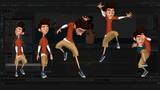








Learn how to animate a three-hit combo for videogames using motion capture as a base. This is an advanced workshop for animators looking to use mocap for games, detailing Maya’s Human IK motion-capture package, including the retargeting and animation settings.
Brand Yates is an animator with nine years of experience in videogames. He shares how to use Maya’s retargeting and HIK system and explains some of the important advanced posing, timing, and layering techniques used when animating for AAA games. He also discusses how to branch out your combo into different strings while ensuring all animations flow together — no matter what inputs are entered by the player.
Upon completing this workshop, you should feel confident using a combination of animation layers in Maya, along with the Time Editor and the Time Warp, to achieve a three-hit combo in Maya with the goal of achieving AAA game quality.
16 Lessons
Brandon introduces his workshop with a lesson that provides a comprehensive workflow for preparing a skeletal rig in Maya to receive motion-capture data via the HumanIK system. The characterization process, while detailed and requiring careful joint mapping, is streamlined by Maya's mirroring capabilities and becomes straightforward once understood. Proper setup, including creating an accurate T-pose and locking the character definition, is essential for successful motion capture retargeting in subsequent workflows.
Duration: 13m 17s

This lesson provides a comprehensive overview of Maya's HumanIK retargeting system, emphasizing that, while numerous settings exist, most should be used conservatively to preserve the quality of the original mocap data. Brandon's preference for "absolute" roll settings, avoidance of floor contacts and pulls, and selective use of features like Match Source reflects a philosophy of minimal intervention in good mocap data. Once properly retargeted and baked, the animation will be ready for cleanup and refinement using the HumanIK control rig to address issues like arm length differences between the source and target characters.
Duration: 15m 2s

Understanding Maya's HumanIK rig modes and FK/IK switching is essential for efficiently working with motion capture data. The ability to toggle between different selection modes, activate IK controls, and use pinning in world space provides animators with powerful tools for cleaning up and refining mocap animations. Brandon's workflow prepares the animation for further refinement, with the next step being to speed up the motion-capture data for video game implementation.
Duration: 12m 4s

Proper retiming is essential for making mocap data suitable for fighting games, where responsive, snappy animations are critical for gameplay feel. By strategically removing dead frames, favoring key poses like anticipation, and using Maya's Scene Time Warp feature correctly, animators can reduce frame counts significantly while maintaining animation quality. Brandon's careful baking process ensures the retimed data is properly transferred to the control rig without creating technical issues in the animation pipeline.
Duration: 10m 12s

This lesson emphasizes that cleaning mocap data is a methodical, iterative process that combines technical workflow discipline with traditional animation principles. Rather than accepting mocap data as perfect, animators should use their animation instincts to create cleaner curves, better spacing, and more polished motion while preserving the authentic performance capture. The key is working hierarchically from hips outward, baking frequently, and maintaining proper skeletal constraints to create game-ready animations that are both responsive and visually appealing.
Duration: 37m 30s

This comprehensive lesson demonstrates a professional workflow for cleaning motion-capture data in the lower body, emphasizing the importance of pivot effectors, strategic curve editing, and maintaining natural motion qualities. Brandon's approach balances technical precision with artistic sensibility — knowing when to preserve mocap subtleties and when to impose cleaner animation principles. By the end of the process, the entire body will have a clean, smooth motion-capture data that's properly timed and ready for the next phase: adding solid posing, overlap, and meeting combo technicalities for game animation.
Duration: 37m 56s

This lesson provides a professional pipeline for transforming raw motion-capture data into polished video game animation. The key lesson is that effective mocap cleanup requires knowing when to trust the captured data and when to apply traditional animation principles. Brandon's systematic approach of retargeting, time warping, and hierarchical cleanup (starting from hips and working outward) ensures efficient workflow while maintaining the natural quality of the original performance, ultimately creating responsive, visually appealing combat animations suitable for interactive gameplay.
Duration: 23m 13s

Animation layers are powerful tools for non-destructively editing and enhancing motion capture or keyframe animation. By understanding how additive and override layers work, animators can quickly add energy and polish to their work. The ability to selectively influence specific body parts or transforms while preserving underlying animation data makes layers essential for efficient, iterative animation workflows.
Duration: 16m 49s

The Time Editor is a powerful but complex tool in Maya for managing and combining animation sequences. By exporting individual animation clips and reimporting them into a master timeline, animators can efficiently create complex combo sequences while maintaining control over timing, spacing, and blending between movements. Though it requires careful attention to baking procedures and namespace management, mastering the Time Editor enables non-destructive animation editing and seamless combination of separately created animation sequences.
Duration: 12m 10s

This lesson showcases a professional workflow for integrating idle poses into existing combat animations while maintaining clean motion and preventing common issues like foot sliding. Brandon's methodical approach of separating translate and rotate data, strategically placing zero keys during airborne moments, and working with animation layers allows for non-destructive refinement. By carefully managing the timing and curves of the transitions, animators can create polished, combat-ready animation cycles that can seamlessly blend between action and rest states.
Duration: 30m 31s

This lesson demonstrates a professional workflow for refining fighting game animations that balances technical precision with artistic appeal. Brandon's iterative process of creating animation layers, refining key poses, fixing pathing issues, and cleaning up mocap data shows how polished game animation requires constant evaluation and adjustment. His emphasis on blend poses, proper striking positions, and fighter-appropriate guard stances reveals the specialized knowledge needed for combat animation in games where frame-accurate timing can determine gameplay success.
Duration: 31m 25s

This lesson emphasizes that effective overlap animation requires a systematic, layered approach combined with constant evaluation and refinement. Brandon demonstrates that, while overlap is essential for creating fluid, believable animation, it must be carefully balanced to avoid undermining the power and clarity of the performance. By working methodically from spine to extremities, maintaining subtle movements, and being willing to adjust or blend back previous versions, animators can add polish and life to their work while preserving the core energy and intent of each action.
Duration: 49m 34s

This lesson demonstrates an essential workflow for creating fluid combat animation systems in games. By methodically identifying blend frames, organizing animations in the Time Editor, and testing all possible combo variations, animators can ensure smooth transitions between attacks and idle states. The completed stitched combo is now ready for final polish work to refine any remaining timing or posing issues.
Duration: 10m 24s

This comprehensive polishing lesson demonstrates that great combat animation requires meticulous attention to detail at every level, from overall timing and cadence down to individual curve adjustments in the graph editor. By systematically examining each body part, identifying and fixing blend pose issues, and carefully repopulating improvements across all combo variations, Brandon ensures the final result feels cohesive, responsive, and as if it were performed by a single, consistent character. His disciplined approach of cleaning one section thoroughly before copying it to others saves time while maintaining quality throughout the entire combo system.
Duration: 52m 10s

This lesson showcases a professional workflow for creating impactful hit reactions that feel weighty and responsive. The key lesson is that creating believable impact animation requires multiple refinement passes, using animation layers strategically to maintain flexibility while addressing issues like timing, deformation, and weight distribution. By treating animation layers as directorial tools and maintaining a methodical approach to spacing and secondary motion, animators can achieve polished results that read clearly in real-time applications like video games.
Duration: 40m 18s

This final lesson successfully demonstrates a functional combo system for fighting games that rewards precise, sequential input while penalizing mistakes. Brandon concludes his workshop with a demonstration of how proper execution creates smooth, game-like combo flows, giving artists a practical example of interactive gameplay mechanics they can apply to their own projects.
Duration: 44s

Primary tools
For this workshop you’ll need:

* Note that these programs and materials will not be supplied with the course.
Project Files
When you download the workshop files, you'll get access to all the project files from Brandon's workshop. Inside you'll find:
- Maya files (.mb) – The mannequin file for independent practice, along with the three hit animation versions are provided for further analysis
Skills Covered
Who’s this Workshop for?
This workshop is designed for advanced animators with existing Maya experience who work in or aspire to work in the video game industry. It's specifically geared toward professionals seeking to master motion capture workflows and create AAA-quality combat animations using industry-standard techniques and tools.
Technical directors, senior animators, and freelance artists will also benefit significantly from this intensive workshop. Participants will gain essential skills in mocap retargeting, animation layering, and combo system development, which are crucial to modern game production pipelines and highly sought after by major studios.
Learning Outcomes
By completing this workshop, artists will have mastered the essential motion capture and combat animation techniques required for professional AAA game development.
Key skills include:
- How to effectively use Maya's HumanIK system for motion capture retargeting workflows.
- How to implement advanced posing and timing techniques for dynamic combat animations.
- How to utilize animation layers in Maya for complex character movement refinement.
- How to leverage Time Editor and Time Warp tools for precise animation control.
- How to create seamless three-hit combo animations from motion capture foundation data.
- How to develop branching combo strings that flow together regardless of player inputs.
- How to apply professional AAA game animation standards and quality benchmarks effectively.


