
 Photoshop
 ZBrush
 Houdini
 Substance Painter
 Blender
 Unreal Engine
 Arnold
 Nuke
Nuke KeyShot
 V-Ray
V-Ray Marmoset Toolbag
 Mari
Mari Marvelous Designer
 Substance Designer
 3ds Max
 3DCoat
 Redshift
 Faceform Wrap
 Lightroom
 After Effects
 OctaneRender
 SpeedTree
 Daz 3D
 Agisoft Metashape
 Fusion
 Modo
Modo RealityCapture
 Gaea
Gaea Cinema 4D
 Gravity Sketch
 Premiere
 Procreate
 Clip Studio Paint
 SketchUp
 SketchBook
 Katana
 Natron
 Mudbox
 Quixel Bridge
 Quixel Megascans
 Quixel Mixer
 Substance 3D Modeler
 World Creator
 Yeti
Yeti Ziva VFX
 Mixamo
 Adobe Medium
 Quixel DDO
 xNormal
 Meshmixer
 Storyboard Pro
 DaVinci Resolve
 TreeIt
 World Machine
 Gaffer
 Corel Painter
 SynthEyes
 Krita
Krita Massive
 Materialize
 Unity
Unity Ornatrix
 PreForm
 Moi 3D
 animBot
 QuickTime
 ReCap
ReCap












15 Lessons
In this first lesson, Chris covers setting up the cameras to support an effective workflow. Walk cycles serve as both a technical exercise and a crucial tool for character exploration. He stresses the importance of making confident, creative choices early in the process, particularly by committing to camera angles, while maintaining the flexibility to adjust as needed. Mastering walk cycles is a gateway to more creative opportunities in expressive character animation.
Duration: 2m 25s

This lesson establishes the foundational workflow for creating a walk cycle in Maya, emphasizing technical preparation over perfectionism. By setting up proper selection sets and establishing solid contact poses with a locked camera, Chris creates an efficient framework for the iterative refinement process ahead. His practical approach acknowledges that poses will evolve during animation, encouraging students to move forward confidently rather than getting stuck in endless adjustments at the beginning stage.
Duration: 5m 19s

The crossing pose is essential for creating realistic walk cycles, establishing the natural weight transfer that occurs during human locomotion. Chris demonstrates how, by carefully positioning opposite poses 12 frames apart and checking symmetry from multiple camera angles, animators can build the foundational figure-8 movement pattern that characterizes all effective walk cycles. This groundwork of blocking out key poses will later be refined through breakdown passes to achieve a polished, natural-looking animation.
Duration: 4m 9s

This lesson demonstrates that successful walk-cycle animation requires both an understanding of biomechanical theory and meticulous attention to detail. By combining efficient use of in-betweening tools with careful manual refinement, animators can create character-specific walks that convey personality while maintaining the technical quality needed for production. Chris's emphasis on symmetry checks, graph editor monitoring, and systematic playblast documentation provides a professional workflow that prevents common pitfalls and ensures consistent quality throughout the animation process.
Duration: 11m 59s

This lesson demonstrates an efficient workflow for transitioning from blocked animation to splined curves in a walk cycle. Chris teaches how, by carefully preparing stepped keyframes and ensuring proper loop points, animators can use automatic spline interpolation as a solid starting point for further refinement, saving time while maintaining quality results.
Duration: 1m 32s

This lesson demonstrates how technical curve refinement and artistic polish are equally important in animation. The methodical cleanup of animation curves eliminates technical problems while maintaining timing integrity, and the strategic application of overlapping motion transforms a mechanical walk cycle into one with genuine character and personality. By understanding both the mathematical precision of curves and the principles of natural motion overlap, animators can create cycles that are not only technically sound but also engaging and full of life.
Duration: 14m 29s

This lesson demonstrates that creating believable character animation requires both technical precision and artistic intuition. While automated techniques like curve offsetting can speed up workflow, manually animating overlap and follow-through gives animators the control needed to create natural, weighted movement. The key lesson is understanding how body parts relate to each other through opposing actions and delayed motion, and maintaining clean, properly structured animation curves that can be cycled, edited, and built upon. Proper keyframe management, linear curves for planted feet, and contained cycles will enable creative freedom in later animation stages.
Duration: 24m 22s

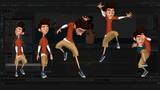
This lesson demonstrates that successful character animation relies heavily on thorough preparation and organization before creating actual movement. By establishing clear emotional contrasts and following proper mechanical principles for actions, such as jumping, animators can create believable and appealing performances. The blocking phase is fundamentally about clearly communicating emotions through poses, while maintaining technical rigor by checking work from all angles ensures the animation will hold up through the entire production pipeline.
Duration: 11m 45s

The breakdown phase transforms static poses into dynamic, believable animation by carefully controlling which body parts lead and drag, emphasizing physical contrasts, and pushing the details that sell the performance. By working methodically in stepped mode with breakdowns every two frames, animators can thoroughly explore the physics and emotional intensity of a shot before moving to spline curves. Chris's thorough breakdown pass makes the subsequent spline phase much easier by clearly mapping out the motion, reducing guesswork, and allowing animators to focus on final refinements.
Duration: 11m 38s

This lesson emphasizes a practical, efficient animation workflow, where the dirty spline technique serves as a checkpoint before committing to the final animation. Chris demonstrates that successful animation showcases are built on strong visual storytelling and technical execution rather than complex narratives. By combining smart camera work, timing adjustments, and visual tricks such as misdirection, animators can learn how to create compelling sequences that demonstrate their skills while maintaining creative flexibility throughout production.
Duration: 8m 25s

The spline pass is fundamentally about refinement and polish rather than solving fundamental animation problems. By simplifying curves, removing unnecessary keys, and ensuring that translation and rotation work in harmony, animators can discover how to transform choppy motion into smooth, appealing performance. The key is to work systematically from the character's core outward, applying artistic principles that prioritize visual appeal over strict physical accuracy.
Duration: 8m 38s

This lesson discusses why engaging character animation requires constant variation and attention to detail. By strategically adding simple performance elements, such as head turns during walk cycles, and ensuring proper technical setup through layer and curve management, animators can transform mundane cycles into compelling character moments. Chris explains why it's important to always keep characters active and interesting while maintaining technical precision to avoid common pitfalls, such as foot-sliding.
Duration: 5m 53s

This lesson emphasizes the importance of subtle details in character animation, particularly how small adjustments to facial features and body mechanics can significantly enhance believability and visual storytelling. The techniques demonstrated, from eyebrow positioning to proportional chest rotation, reveal how effective animation lies in creating natural, dynamic movement that supports the character's attention and intent without appearing mechanical or static.
Duration: 4m 56s

This lesson emphasizes that effective character animation, especially for inactive characters with significant screen time, relies on authenticity and specificity rather than complexity. By focusing on character-defining traits, clear emotional responses, and natural timing, animators can learn how to create believable performances that serve the story without overwhelming the scene. Chris explains why the key is in understanding that subtle, character-appropriate movements can carry a shot when major action isn't required.
Duration: 6m 31s

This final lesson shows how the polish phase separates professional animation from amateur work through subtle refinements that bring characters fully to life. While technically challenging, polish involves adding natural details such as breathing, weight shifts, overlapping actions, and small movements to prevent characters from feeling robotic or lifeless. The goal is to pack maximum entertainment and emotional impact into the shot while maintaining balance and avoiding visual overload for the viewer.
Duration: 6m 34s

Primary tools
For this workshop you’ll need:

* Note that these programs and materials will not be supplied with the course.
Project Files
When you download the workshop files, you'll get access to several playblasts of animations created in the workshop. Inside, you'll find:
- Video examples of the animation stages – Animation playblasts of various stages of the project, from blockout to the final polished versions
Skills Covered
Who’s this Workshop for?
This workshop is designed for animators at all skill levels, from beginners starting their animation journey to seasoned professionals seeking to refine their craft. Students building their first demo reels and those preparing for careers in feature animation will find the Maya-focused lessons particularly valuable.
Animation veterans seeking a refresher on core professional techniques will benefit from Chris Kirshbaum's feature-film perspective. The workshop's comprehensive approach to emotional storytelling through character animation makes it ideal for artists working on both professional productions and personal creative projects.
Learning Outcomes
By completing this workshop, artists will develop essential skills for creating compelling character animations that effectively communicate emotional transitions through visual storytelling.
Key skills include:
- How to animate character emotions using body language and physical performance techniques.
- How to utilize Maya's Graph Editor for precise timing and spacing control.
- How to navigate Maya's workspace interface efficiently for professional animation workflows.
- How to use the Playblast function effectively for reviewing and refining animation sequences.
- How to incorporate light scripting techniques to enhance animation production efficiency.
- How to apply feature film animation principles to any creative or professional project.
- How to create a complete, demo reel-worthy animation shot from start to finish.


