
 Photoshop
 Maya
Maya ZBrush
 Substance Painter
 Arnold
 Nuke
Nuke KeyShot
 V-Ray
V-Ray Marmoset Toolbag
 Mari
Mari Marvelous Designer
 Substance Designer
 3ds Max
 3DCoat
 Redshift
 Faceform Wrap
 Lightroom
 After Effects
 OctaneRender
 SpeedTree
 Daz 3D
 Agisoft Metashape
 Fusion
 Modo
Modo RealityCapture
 Gaea
Gaea Cinema 4D
 Gravity Sketch
 Premiere
 Procreate
 Clip Studio Paint
 SketchUp
 SketchBook
 Katana
 Natron
 Mudbox
 Quixel Bridge
 Quixel Megascans
 Quixel Mixer
 Substance 3D Modeler
 World Creator
 Yeti
Yeti Ziva VFX
 Mixamo
 Adobe Medium
 Quixel DDO
 xNormal
 Meshmixer
 Storyboard Pro
 DaVinci Resolve
 TreeIt
 World Machine
 Gaffer
 Corel Painter
 SynthEyes
 Krita
Krita Massive
 Materialize
 Unity
Unity Ornatrix
 PreForm
 Moi 3D
 animBot
 QuickTime
 ReCap
ReCap

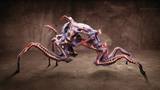
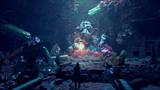












In this free workshop, Kosuke Iwasaki breaks down the real-time cinematic workflow behind his Rampage Rally 3D community challenge entry, focusing on rapid iteration and practical decision-making in Unreal Engine 5.
This 30-minute tutorial is aimed at intermediate Unreal Engine users who are comfortable navigating the UE editor and want to better understand how character animation, destruction, and procedural environment tools can work together in a production-style pipeline. Prior experience with Unreal Engine is recommended, while knowledge of Control Rig, Chaos, PCG, or Houdini is helpful but not required in order to follow along.
The workshop covers four main areas: Character setup and animation using Control Rig; Physical destruction using Chaos Destruction and Chaos Cache; Procedural environment construction using the PCG Framework; A brief look at Houdini RBD workflows for advanced destruction that integrates back into Unreal.
Throughout this free workshop, Kosuke focuses on keeping animation and modeling pipelines separate, allowing proxy assets to be swapped with final meshes without redoing work.
In addition to tool-specific techniques, he shares industry-focused insights on iteration speed, proxy workflows, and keeping shots flexible under time constraints, such as during community challenges or real-time productions.
By following the included lessons, viewers will learn how to build a cinematic shot in Unreal Engine using a modular, non-destructive workflow that supports rapid experimentation.
Project files are available with this workshop, including sample Control Rig assets, Chaos-generated destroyed meshes, and PCG graphs used in the tutorial. Download here: https://bit.ly/KIW02pfiles
8 Lessons
In this introductory lesson, Kosuke introduces the Rampage Rally 3D community challenge and outlines the real-time cinematic workflow used in this project. He provides context for the workshop and previews the four main areas covered: character animation with Control Rig, destruction using Chaos and Houdini, procedural environments with PCG, and assembling everything into a final cinematic shot in Unreal Engine.
Duration: 3m 7s

This lesson covers creating a low-poly proxy robot in Blender and preparing it for animation in Unreal Engine. Topics include hard-surface rigging, bone hierarchy setup, full-weight assignment without soft skinning, scale considerations for Unreal compatibility, and proper FBX export settings to ensure clean skeleton import and Control Rig integration.
Duration: 5m 3s

This lesson explains how to transition from keyframed animation to physics-based motion using Unreal’s Chaos physics system. It covers setting up Physics Assets, triggering ragdoll simulation in Sequencer, refining joint limits for mechanical characters, and using Take Recorder to capture consistent, reusable ragdoll performances for cinematic shots.
Duration: 2m 26s

This lesson explores upgrading a proxy character into a final robot design using a kitbash workflow. Artists will discover how to reuse existing assets, maintain silhouette consistency, reassign weights efficiently, and swap meshes in Unreal while keeping the same skeleton, so animation and physics remain intact throughout the modeling process.
Duration: 4m 3s

This lesson introduces a Houdini-based Rigid Body Dynamics workflow for advanced destruction. Topics include exporting animation from Unreal, preparing geometry for simulation, setting up constraints, preserving velocity and material attributes, and exporting FBX animations that integrate cleanly back into Unreal for high-impact destruction moments.
Duration: 4m 5s

This lesson demonstrates how to create destroyed building assets directly in Unreal Engine using Chaos Destruction. Artists will learn how to fracture meshes, fix common geometry issues, record simulations with Chaos Cache Manager, and convert destruction states into reusable static meshes, ideal for environment set dressing and procedural workflows.
Duration: 4m 50s

This final lesson in Kosuke’s workshop breaks down a practical workflow for building environments using Unreal’s Procedural Content Generation framework. Topics include spline sampling, density filtering, attribute noise, actor-based masking, road generation, and asset swapping based on proximity and tags — showing how PCG can be used to create fast, art-directable city layouts.
Duration: 8m 7s

Duration: 36s

Primary tools
For this workshop you’ll need:


* Note that these programs and materials will not be supplied with the course.
Skills Covered
Who’s this Workshop for?
Motion graphics artists, visualization professionals, and students pursuing careers in real-time rendering will also benefit significantly. The modular workflow approach and rapid iteration techniques demonstrated here translate directly to commercial projects, making this valuable for anyone working under tight deadlines or client revisions.
Learning Outcomes
By completing this workshop, artists will have mastered a complete real-time cinematic pipeline that prioritizes flexibility, speed, and professional production standards.
Key skills include:
* How to set up character animation using Control Rig for rapid iteration workflows.
* How to implement Chaos Destruction and Chaos Cache for realistic physical destruction effects.
* How to build procedural environments using PCG Framework for non-destructive scene construction.
* How to maintain separation between animation and modeling pipelines for maximum flexibility.
* How to integrate Houdini RBD workflows with Unreal Engine for advanced destruction sequences.
* How to design proxy workflows that allow asset swapping without redoing previous work.
* How to optimize iteration speed while maintaining shot flexibility under production time constraints.


