
 Photoshop
 Maya
Maya ZBrush
 Houdini
 Substance Painter
 Blender
 Unreal Engine
 Arnold
 Nuke
Nuke KeyShot
 V-Ray
V-Ray Marmoset Toolbag
 Mari
Mari Marvelous Designer
 Substance Designer
 3ds Max
 3DCoat
 Redshift
 Faceform Wrap
 Lightroom
 After Effects
 OctaneRender
 SpeedTree
 Daz 3D
 Agisoft Metashape
 Fusion
 Modo
Modo RealityCapture
 Gaea
Gaea Cinema 4D
 Gravity Sketch
 Premiere
 Procreate
 Clip Studio Paint
 SketchUp
 SketchBook
 Katana
 Natron
 Mudbox
 Quixel Bridge
 Quixel Megascans
 Quixel Mixer
 Substance 3D Modeler
 World Creator
 Yeti
Yeti Ziva VFX
 Mixamo
 Adobe Medium
 Quixel DDO
 xNormal
 Meshmixer
 Storyboard Pro
 DaVinci Resolve
 TreeIt
 World Machine
 Gaffer
 Corel Painter
 SynthEyes
 Krita
Krita Massive
 Materialize
 Unity
Unity Ornatrix
 PreForm
 Moi 3D
 animBot
 QuickTime
 ReCap
ReCap

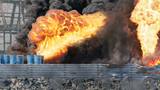










Learn how to simulate impressive tire smoke FX using Houdini’s Pyro Sparse Solver in this intermediate-level workshop by Senior FX Artist Eric Mancha. This workshop is ideal for users with some experience using Houdini and Nuke and is approached from a studio production perspective to teach artists exactly what is expected from an FX artist in a studio environment.
In this 2-hour workshop, Eric creates the smoke simulation from scratch, explaining how to do collisions, how to use the Micro Solver Setup, and how to create custom velocity. You’ll learn effective lighting and rendering techniques and also discover how to use Nuke to composite the FX elements for the final presentation in Nuke.
As well as learning how to create a Pyro Sparse Solver from scratch, you’ll also see how to apply custom micro solvers and use VEX for simulation integration. Project files include an animated 3D model, provided by HKV Studios, the render cam, and the final setup from the scene to assist artists with learning the techniques shown.
8 Lessons
Eric Mancha’s workshop provides a production-ready workflow for creating realistic tire smoke effects by combining particle systems with pyro simulations in Houdini. Eric emphasizes industry-standard practices and explains how particle-based emission sources and properly configured solvers can help the artist achieve flexible smoke effects that respond realistically to vehicle motion.
Duration: 12m 24s

This workflow establishes the foundation for a tire smoke simulation by setting up collision objects with velocity data and VDB representations. While initial results show the smoke interacting with the tire and ground, Eric notes that further refinement is needed for the vehicle body. The next steps focus on fine-tuning simulation parameters to achieve more polished results.
Duration: 12m 27s

This lesson demonstrates a technical workflow for creating stable vehicle collision geometry. The main insight is how to use VDB conversion to turn complex, fragmented car geometry into clean, simulation-ready meshes. Eric notes that while collisions are now functional, future refinements will include adjusting pyro settings and implementing dissipation for a more realistic final result.
Duration: 10m 32s

This lesson introduces a systematic approach to enhancing Pyro simulations through layered micro solvers. By carefully adjusting density ranges and turbulence while avoiding over-parameterization, Eric creates natural-looking smoke behavior. Eric explains why making targeted adjustments to specific areas while keeping defaults elsewhere can make troubleshooting easier for the artist.
Duration: 16m 58s

In this lesson, artists learn a technique for creating custom force fields that offer more control than basic solvers. By combining VDB analysis and VEX scripting, Eric demonstrates how to create directional forces that push smoke in realistic patterns behind a moving vehicle. The next steps involve comparing these results to real-world reference footage to achieve physically accurate behavior.
Duration: 18m

This lesson presents a refinement process essential to achieving realistic VFX simulations. Through multiple test cycles, Eric systematically adjusts the emission density and wind forces to create a convincing tire-burnout effect. Eric explains how to make incremental adjustments until the desired look is achieved.
Duration: 11m 59s

In this lesson, Eric demonstrates professional lighting and rendering workflows for volumes. By separating lighting into RGB and beauty passes, the workflow creates a flexible pipeline that provides the artist with maximum control in post-production. This methodical approach reflects industry practices that balance visual quality with efficient render times.
Duration: 13m 51s

The final lesson in Eric’s workshop demonstrates a compositing workflow that maximizes creative control. By separating RGB passes for different light sources, the artist can make aesthetic adjustments without re-rendering. Eric explains that this approach is especially valuable in fast-paced environments, ensuring better collaboration between effects artists and compositors.
Duration: 10m 22s

Primary tools
For this workshop you’ll need:
Project Files
When you download the workshop files, you'll get access to Eric Mancha's smoke files. Inside, you'll find:
- 3D models & geometry (.abc, .fbx, .obj) – The car model used for the tire smoke that includes animation
- Houdini project files (.hipnc) - The main scene files where you will create the smoke FX
- Reference Materials (.jpg, .mtl) - Reference images and texture files to support your workflow
Skills Covered
Who’s this Workshop for?
This workshop is developed for intermediate Houdini users with foundational knowledge of both Houdini and Nuke who want to advance their FX skills. Artists seeking to understand studio production workflows and industry-standard practices for creating realistic pyro simulations will find the most value from Eric's workshop.
Technical artists, VFX generalists, and motion graphics designers will also benefit greatly from this production-focused approach. The workshop bridges the gap between basic software knowledge and professional studio expectations, providing practical insights into collision systems, custom velocity creation, and integrated compositing workflows that are essential in today's competitive industry.
Learning Outcomes
Once completing this workshop, artists will have mastered professional level tire smoke simulation techniques using studio production workflows and industry-standard practices.
Key skills include:
- How to build Pyro Sparse Solver simulations from scratch for realistic smoke effects.
- How to implement proper collision systems for accurate interaction between smoke and objects.
- How to configure Micro Solver Setup for enhanced simulation control and customization.
- How to create custom velocity fields using VEX for realistic smoke behavior patterns.
- How to apply effective lighting and rendering techniques for professional smoke presentation quality.
- How to composite FX elements in Nuke for seamless integration into final shots.
- How to optimize simulation workflows to meet studio production deadlines and quality standards.


