
 Photoshop
 Maya
Maya ZBrush
 Houdini
 Substance Painter
 Blender
 Unreal Engine
 Arnold
 Nuke
Nuke KeyShot
 V-Ray
V-Ray Marmoset Toolbag
 Mari
Mari Marvelous Designer
 Substance Designer
 3ds Max
 3DCoat
 Redshift
 Faceform Wrap
 Lightroom
 After Effects
 OctaneRender
 SpeedTree
 Daz 3D
 Agisoft Metashape
 Fusion
 Modo
Modo RealityCapture
 Gaea
Gaea Cinema 4D
 Gravity Sketch
 Premiere
 Procreate
 Clip Studio Paint
 SketchUp
 SketchBook
 Katana
 Natron
 Mudbox
 Quixel Bridge
 Quixel Megascans
 Quixel Mixer
 Substance 3D Modeler
 World Creator
 Yeti
Yeti Ziva VFX
 Mixamo
 Adobe Medium
 Quixel DDO
 xNormal
 Meshmixer
 Storyboard Pro
 DaVinci Resolve
 TreeIt
 World Machine
 Gaffer
 Corel Painter
 SynthEyes
 Krita
Krita Massive
 Materialize
 Unity
Unity Ornatrix
 PreForm
 Moi 3D
 animBot
 QuickTime
 ReCap
ReCap












15 Lessons
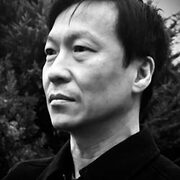
Gary Meyer’s workshop teaches three-point perspective, a flexible drawing technique that can be approached intuitively by sketching the subject first and then setting up the vanishing points. While there are technical rules, Gary emphasizes that artists can work more freely without requiring exact measurements, accepting some wide-angle distortion as visually familiar from modern photography and film.
Duration: 6m 55s

Three-point perspective is considerably more complex than one or two-point perspective, requiring careful setup of multiple reference systems. This approach allows artists to accurately depict objects from extreme angles by maintaining proper proportions through geometric measurement. Gary demonstrates that this foundational framework enables precise dimensional control in three-dimensional space once the relationships between horizons and reference lines are understood.
Duration: 12m 57s

This lesson focuses on the process for accurate three-point perspective drawing, highlighting how measuring points and vanishing points work together to create correctly foreshortened dimensions. The most important takeaway is understanding when to use specific points, and Gary highlights the importance of the cone of vision in determining which parts of a drawing will appear natural and undistorted to viewers.
Duration: 5m 5s

This lesson highlights the systematic process needed for accurate three-point perspective drawing, showing how different reference points work together to create correctly foreshortened dimensions. Gary explains the difference between various measuring methods and the importance of the cone of vision in determining which parts of a drawing will appear natural and undistorted.
Duration: 11m 24s

This comprehensive lesson covers essential techniques for accurately rendering natural light and shadows in perspective drawings. By understanding the relationship between the shadow vanishing point and light source, artists can create convincing shadows that enhance depth and realism in their work. A practical approach, combining technical precision with creative application, shows how proper shadow construction can serve both accuracy and storytelling purposes in illustration.
Duration: 17m 9s

This lesson demonstrates an approach to creating accurate natural-light shadows in two-point perspective. The core idea is to understand that natural sunlight casts parallel rays that can be mapped using vanishing points, with shadows following predictable geometric rules based on the orientation of the lines. Mastering these techniques allows artists to create convincing shadows on complex forms and multiple surfaces, as Gary notes that careful planning ensures clarity and prevents coincidental lines.
Duration: 13m 29s

In this lesson, artists will explore essential techniques for constructing accurate cylinder shadows in perspective using both negative and positive sun positions. The method relies on geometric construction using tangent lines and carefully plotted reference points to create realistic elliptical shadows. Gary demonstrates how understanding this allows designers to accurately represent cylindrical forms and their cast shadows in various lighting conditions, ensuring artists remain aware of how sun positions influence visual results at extreme distances.
Duration: 11m 9s

Gary explains how drawing shadows of floating objects requires understanding two key principles regarding how lines project toward the shadow vanishing point. By first establishing a ground reference and using light sources, artists learn to accurately construct complex shadows that add depth and realism to elevated objects in perspective drawings.
Duration: 5m 26s

The key difference from natural light is understanding that nearby light sources create radiating rather than parallel shadow patterns. This means each surface level requires specific radiating points. Gary demonstrates that mastering these principles enables accurate depiction of complex lighting scenarios involving elevated surfaces and non-vertical objects.
Duration: 20m 36s

This lesson introduces a geometric method for accurately rendering cylindrical shadows under artificial lighting. By using tangent lines and vertical construction guides, Gary shows how to create realistic, elliptical shadows rather than guessing at their shape. The technique emphasizes precision through mathematical construction, resulting in well-proportioned shadows that enhance the three-dimensional illusion in drawings.
Duration: 3m 48s

Understanding perspective reflections starts with recognizing that reflections mirror objects at equal distances through the reflective plane while still following the rules of the scene's perspective system. Gary provides artists and designers a clear, math-based method for accurately depicting reflective surfaces.
Duration: 5m 9s

This lesson covers an important principle for artists working in perspective: reflections must follow the same rules as other objects in the scene. Gary shows how using geometric construction methods ensures mathematical accuracy, which allows artists to create convincing reflective surfaces in complex two-point perspective drawings.
Duration: 3m 26s

This technique provides a geometric method for accurately depicting reflections in perspective drawings. By establishing a reflection point and using reference points, Gary highlights how to plot multiple reflections without unnecessary construction. This method demonstrates how principles of perspective and geometric relationships work together to create convincing spatial illusions in technical drawing.
Duration: 4m 42s

Gary explains how, by using geometric principles of doubling distances and finding midpoints, artists can properly render how vertical objects and their base points appear when reflected in walls at angles. This method is essential for creating realistic interior scenes with reflective surfaces in technical and artistic drawings.
Duration: 2m 29s

In this final lesson, Gary explains that reflecting multiple objects at different angles demonstrates how panels can appear dramatically different depending on their orientation relative to both the picture plane and the reflective surface. This type of technical drawing benefits from careful planning and frequent adjustments to maintain maximum clarity.
Duration: 7m 54s

Skills Covered
Who’s this Workshop for?
This workshop is designed for intermediate to advanced artists who already have a foundational understanding of one- and two-point perspective and are ready to master even more complex spatial concepts. Gary Meyer’s training is ideal for illustrators, concept artists, and digital painters aiming to create believable, three-dimensional environments and objects.
Even beginner artists with basic perspective knowledge will gain significant value from this comprehensive exploration of advanced techniques. Students, hobbyists, and professional artists will develop the confidence to tackle challenging perspective scenarios, including complex lighting, reflections, and accurate scale representation; empowering them to produce polished, professional-quality artwork.
Learning Outcomes
On completing this workshop, artists will have mastered three-point perspective principles and advanced techniques for creating accurate shadows, reflections, and scale relationships.
Key skills include:
- How to construct accurate three-point perspective drawings using proper vanishing point placement techniques.
- How to plot realistic shadows in perspective using both natural sunlight and artificial lighting.
- How to calculate and draw convincing reflections within one-point perspective construction systems.
- How to create accurate reflections in two-point perspective drawings with proper proportional relationships.
- How to transfer and maintain consistent scale measurements when working with reflected surfaces.
- How to apply three-point perspective terminology and concepts to complex illustration projects.


