
 Photoshop
 Maya
Maya ZBrush
 Houdini
 Substance Painter
 Blender
 Unreal Engine
 Arnold
 Nuke
Nuke KeyShot
 V-Ray
V-Ray Marmoset Toolbag
 Mari
Mari Marvelous Designer
 Substance Designer
 3ds Max
 3DCoat
 Redshift
 Faceform Wrap
 Lightroom
 After Effects
 OctaneRender
 SpeedTree
 Daz 3D
 Agisoft Metashape
 Fusion
 Modo
Modo RealityCapture
 Gaea
Gaea Cinema 4D
 Gravity Sketch
 Premiere
 Procreate
 Clip Studio Paint
 SketchUp
 SketchBook
 Katana
 Natron
 Mudbox
 Quixel Bridge
 Quixel Megascans
 Quixel Mixer
 Substance 3D Modeler
 World Creator
 Yeti
Yeti Ziva VFX
 Mixamo
 Adobe Medium
 Quixel DDO
 xNormal
 Meshmixer
 Storyboard Pro
 DaVinci Resolve
 TreeIt
 World Machine
 Gaffer
 Corel Painter
 SynthEyes
 Krita
Krita Materialize
 Unity
Unity Ornatrix
 PreForm
 Moi 3D
 animBot
 QuickTime
 ReCap
ReCap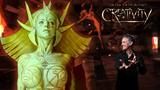

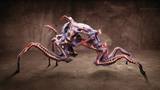



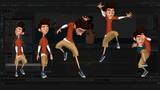











Your comprehensive introduction to Massive Prime has arrived. Head of Crowd/FX TD, Reza Ghobadinic, demonstrates all the key aspects of working with Massive Prime software in this detailed workshop, sharing with you his industry-proven tips and tricks for producing credible crowd simulations suitable for film and TV productions.
During the course of 11 hours of instruction, Reza covers everything you need to know, from the basics of the interface, through to many more advanced topics that are essential to grasping the fundamentals of Massive Prime. Lessons detail how to create agents from scratch including how to gradually add features that will improve their behavior, and discuss the importance of designing the brain in an organized and systematic manner, as used in feature film production. Reza also lectures on how to create a biped crowd agent from a skinned rig and edit animation clips to use for your agent, as well as how to complete it with a dynamic explosion simulation scene.
This essential introduction provides the fundamental knowledge needed to create, test, and render impressive crowd simulations with Massive Prime.
19 Lessons
This workshop by Reza Ghobadinic establishes the foundational knowledge needed to begin working in Massive software. Reza introduces the six core pages and their functions provides the framework for creating crowd simulations. Reza emphasizes the importance of proper project organization and keeping the manual handy to look up technical details used in future lessons.
Duration: 13m 32s

This lesson lays essential groundwork for working in Massive by covering proper scene organization, file management, and basic animation techniques. Artists learn that all Massive files are text-based and manually editable, which is crucial for troubleshooting and workflow efficiency. This separate save system for different scene elements offers flexibility for team-based workflows in larger studios.
Duration: 42m

In this lesson, artists will learn the fundamentals for creating custom agents in Massive, with a focus on proper joint hierarchy, geometry organization, and variable-based randomization. Reza creates a reusable template for future lessons by establishing a base agent with modular components. This workflow demonstrates how the node-based system allows for flexible character creation and efficient control over large crowds.
Duration: 52m 9s

This lesson shows how to create intelligent agent behaviors through visual node-based programming. Artists learn to combine eight node types with regular and alt connections to create complex, randomized behaviors without traditional scripting. This fuzzy logic approach allows for nuanced variations, moving beyond binary decision-making to create realistic simulations.
Duration: 40m 22s

This lesson goes over the techniques for creating sophisticated, modular agents in Massive. Reza organizes logic into reusable modules with exposed parameters to ensure the workflow remains scalable as complexity increases. Upcoming topics such as crowd containment and vision-based obstacle avoidance are introduced to build toward a complete crowd simulation system.
Duration: 33m 4s

Sound-based agent control is an effective way to add spatial awareness and collision avoidance in multi-agent simulations. Artists learn to structure logic modules accounting for distance and direction so agents can maintain boundaries naturally. This approach illustrates core principles that can be expanded for more complex behaviors through the fine-tuning of parameters.
Duration: 55m 39s

Agent fields provide a powerful and scalable method for creating realistic crowd behaviors in Massive. Reza demonstrates replacing a legacy sound-based system with a cleaner agent field implementation for more polished results. While production work requires additional refinement, this setup provides a strong foundation for professional-quality simulations.
Duration: 21m 6s

Vision-based obstacle avoidance gives agents the spatial awareness they need to navigate around geometry in a scene, though at a computational cost. Artists learn to adjust detection parameters and color filters to create realistic avoidance while maintaining performance control. This technique is particularly valuable for dynamic pathfinding in complex environments.
Duration: 17m 52s

This lesson presents an alternative to vision-based navigation by leveraging terrain color channels and gradient detection. Reza shows how painting colored regions on terrain allows agents to intelligently avoid obstacles and respond to the environment. This approach offers better performance than vision systems while maintaining effective navigation.
Duration: 40m 16s

In this lesson, artists learn about two path-following systems in Massive, each suited for different scenarios. Flow fields work well for terrain-based movement, while lanes provide flexibility for complex traffic or aerial paths. Adding controlled randomness through noise parameters prevents unrealistic clustering and creates organic variation in agent behavior.
Duration: 57m 15s

This lesson provides essential techniques for creating interactive agent behaviors involving spawning, collision detection, and conditional actions. Reza demonstrates how combining timers and agent fields allows for the efficient creation of complex combat simulations. Libraries and the pilot buffer are used to manage larger projects and maintain consistent behaviors.
Duration: 36m 14s

This lesson demonstrates a workflow for adding realistic cloth and hair elements to Massive agents while maintaining production efficiency. Artists learn to use multi-pass rendering and file optimization to reduce file count and rendering time.
Duration: 43m 11s

This lesson creates a versatile character agent in Massive by combining multiple asset sources and using the software's variable system. Reza demonstrates how to build a single agent representing many different character appearances by setting up skeleton structures and geometry nodes.
Duration: 37m 42s

This lesson dives into a workflow for integrating professional motion capture data into animated agents. Artists learn to manage timing and transition curves to achieve smooth, realistic character movement. Proper configuration of agent curves and motion trees enables the creation of sophisticated animation systems with interconnected states.
Duration: 33m 19s

This lesson demonstrates advanced crowd animation techniques in Massive, showing how to transform repetitive movements into natural-looking crowd behavior. Reza provides insights into layering randomization techniques, such as phase offsets and rate variations, to create believable diversity. The result is a realistic simulation that avoids the look of basic repeated animations.
Duration: 44m 14s

Setting up proper IK for character feet is an important step for creating realistic walk cycles in Massive. Artists learn to configure joint hierarchies and timing adjustments to use hold curves for foot locking. Terrain adaptation features are also utilized to ensure characters navigate uneven surfaces convincingly.
Duration: 28m 37s

In this lesson, artists will learn the fundamentals for creating realistic, physics-based character reactions to explosions in 3D animation. Reza shows that success lies in a meticulous setup phase, in which joint shapes and physics parameters are configured before simulation. These realistic ragdoll effects significantly enhance the believability of explosion scenes in animation projects.
Duration: 36m 18s

This lesson gives a comprehensive workflow for creating believable, dynamic ragdoll simulations with explosion forces in 3D animation. Artists learn to balance force calculations and optimize performance by deactivating the conditional agent. Following these steps allows animators to create realistic crowd responses to environmental forces while maintaining efficiency.
Duration: 28m

By the end of this workshop, artists will have essential knowledge to render massive crowd simulations using various tools. Reza highlights that while the Velocity renderer offers speed, its flexibility in exporting to other renderers makes Massive adaptable to any pipeline. This foundation enables independent learning through continued experimentation.
Duration: 13m 10s

Primary tools
For this workshop you’ll need:

* Note that these programs and materials will not be supplied with the course.
Skills Covered
Who’s this Workshop for?
This workshop is designed for VFX artists, crowd TDs, and CG generalists who want to build a strong foundation in Massive Prime for film and television production. It is well suited for artists who are new to Massive Prime, as well as those transitioning from other crowd simulation tools and looking to understand industry-standard workflows.
Technical directors, effects artists, and animation supervisors working in studio environments will also benefit from this training. Artists responsible for large-scale simulations who need reliable, organized systems for crowd behavior, animation, and rendering will gain practical knowledge applicable to real production scenarios.
Learning Outcomes
By completing this workshop, artists will gain a solid understanding of how to create, manage, and render professional crowd simulations using Massive Prime.
Key skills include:
- How to navigate Massive Prime’s interface and understand its core concepts and workflow.
- How to create crowd agents from the ground up with structured, scalable brain systems.
- How to design and organize agent behaviors for believable, production-ready simulations.
- How to build biped crowd agents using existing skinned character rigs.
- How to prepare, edit, and integrate animation clips for use in crowd systems.
- How to test and iterate on crowd simulations to ensure stability and visual credibility.
- How to integrate crowd agents into dynamic scenarios, including interaction with explosion simulations.


