
 Photoshop
 ZBrush
 Houdini
 Substance Painter
 Blender
 Unreal Engine
 Arnold
 Nuke
Nuke KeyShot
 V-Ray
V-Ray Marmoset Toolbag
 Mari
Mari Marvelous Designer
 Substance Designer
 3ds Max
 3DCoat
 Redshift
 Faceform Wrap
 Lightroom
 After Effects
 OctaneRender
 SpeedTree
 Daz 3D
 Agisoft Metashape
 Fusion
 Modo
Modo RealityCapture
 Gaea
Gaea Cinema 4D
 Gravity Sketch
 Premiere
 Procreate
 Clip Studio Paint
 SketchUp
 SketchBook
 Katana
 Natron
 Mudbox
 Quixel Bridge
 Quixel Megascans
 Quixel Mixer
 Substance 3D Modeler
 World Creator
 Yeti
Yeti Ziva VFX
 Mixamo
 Adobe Medium
 Quixel DDO
 xNormal
 Meshmixer
 Storyboard Pro
 DaVinci Resolve
 TreeIt
 World Machine
 Gaffer
 Corel Painter
 SynthEyes
 Krita
Krita Massive
 Materialize
 Unity
Unity Ornatrix
 PreForm
 Moi 3D
 animBot
 QuickTime
 ReCap
ReCap











One of the best things you can do to improve your animation workflow in Maya is to learn how to animate with the Master Control. While the Master Control is generally used for the placement of 3D characters, it can also be used to make the animation process a lot simpler — providing that you use it correctly.
This method taught in this 4-hour workshop by Senior Animator Kevin Nguyen can be implemented by animators of all levels, and can be used in both personal projects or professional production shots. It eliminates a lot of the technical hurdles in posing when animating a shot that requires a lot of movements, especially very complex character mechanics.
Kevin’s method will not only simplify the process of animation in Maya, but should ultimately save the animator a lot of time, which is a precious commodity in production. This workshop will help animators to work more freely and focus more on the artistic side of the animation process, rather than being held back by the technical side. This workshop also offers useful workflow tips and tricks to help improve the overall efficiency of any existing animation workflow.
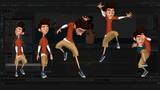
This workshop utilizes the Peinto Anim Rig by Kiel Figgins.
8 Lessons
Kevin Nguyen introduces the concept and utility of the Master Control in Maya and how it could be used throughout the animation process rather than just for initial placement of an actor. This tool allows animators to significantly reduce technical complications and focus more on the creative aspects of posing. This workflow strategy transforms what are typically complex multi-control adjustments into simple, single-control operations; making 3D animation more intuitive and efficient while maintaining the flexibility that animators and artists enjoy.
Duration: 12m 49s

In this lesson, Kevin demonstrates how to use the Master Control when animating a character. His goal is to simplify the dynamic action the reference character does into a stream of compelling poses. He also introduces Temporary Controls and how to use them to separate world space and local space transformations. This gives animators the freedom to focus on making poses and polishing animation curves without constantly battling double translations. This workflow dramatically reduces production time while allowing for greater creative flexibility and easier iteration on complex animated sequences.
Duration: 23m 20s

In this lesson, Kevin continues working with Temporary Controls, refining the jump animation he started in the last lesson. Rather than painstakingly keyframing every control for every change, he can use the Master Control for major positioning and direction changes, then bake and refine individual elements without having to worry about extraneous data. Working in this manner turns previously daunting revisions into manageable tasks that take minutes instead of hours.
Duration: 29m 2s

In this lesson, Kevin revises the reference and explains how to apply the teachings from the previous jump animation, to much longer and more dynamic sequences. By establishing a flexible control hierarchy with offset locators and breaking down elaborate sequences into manageable sections, Kevin shows how artists can work more intuitively and make adjustments easily throughout a sequence. In this way, the scene truly becomes a sequence of adjustable poses.
Duration: 38m 31s

Finishing up his initial pass on the sequence from the last lesson, Kevin works on blocking in as much of the sequence as possible while maintaining believable physics and mechanics in each camera's perspective. By focusing on key transition poses and proper timing, animators can create compelling action sequences as quickly as possible. What's left is the fun part, adding secondary details, timing polish, and any other refinement passes.
Duration: 34m 23s

In this lesson, Kevin's focus is on polishing most of the major issues and lacking parts in his sequence thus far, starting off by converting his system to Temporary Controls. Utilizing the graph editor and animator curves, Kevin demonstrates how to isolate problems and fully resolve them. Kevin's approach shows how artists can use these skills to adapt to late-stage changes; vital for real world production situations that call for flexibility and technical efficiency.
Duration: 35m 41s

In this lesson, Kevin presents us with some studio scenarios that could occur on the job, including environment updates, and major notes on the animation sequence so far. Thankfully, his teachings up to this point combined with some other tools in Maya, allow for animators to quickly iterate on changes. Feedback from directors and leads becomes easy to manage now, and helps the artist concentrate on what will benefit the shot as a whole.
Duration: 14m 10s

In this final lesson, Kevin looks at some ways he can polish up his sequence, and how to export these animations for different departments or industries. One major part of this is understanding what's attached to the master once polish is complete, and resetting the master root control. Kevin quickly archives these results by utilizing the ebLabs script, baking all the root control key frames down into world space.
Duration: 49m 8s

Primary tools
For this workshop you’ll need:

* Note that these programs and materials will not be supplied with the course.
Skills Covered
Who’s this Workshop for?
This workshop is designed for Maya animators of all skill levels who want to streamline their character animation workflow. Whether you're a junior struggling with complex character rigs or an experienced professional looking to optimize your production pipeline, this Master Control methodology will enhance your animation process.
The workshop focuses on eliminating roadblocks that often slow down the creative process, but with Kevin Nguyen's time-saving techniques, artists can concentrate on performance and storytelling rather than wrestling with rig complexities. These features are especially valuable for students, freelance animators, and studio professionals alike, given the demanding production schedules in the industry.
Learning Outcomes
By completing this workshop, artists will have mastered advanced Master Control techniques that significantly improve animation efficiency and reduce technical complexity in Maya.
Key skills include:
- How to effectively utilize the Master Control for complex character positioning and movement planning.
- How to streamline animation workflows by implementing proper Master Control methodology, focusing on what's in shot first.
- How to eliminate common technical hurdles when animating characters with complex mechanical requirements.
- How to optimize keyframe management and timing adjustments using the Master Control as a foundation layer.
- How to integrate these Master Control techniques into existing production pipelines and workflows.
- How to balance technical precision with artistic freedom when animating dynamic character performance shots.


